
Free Child Car Seat Fitting in QLD: 2026 Safety Guide


TLDR
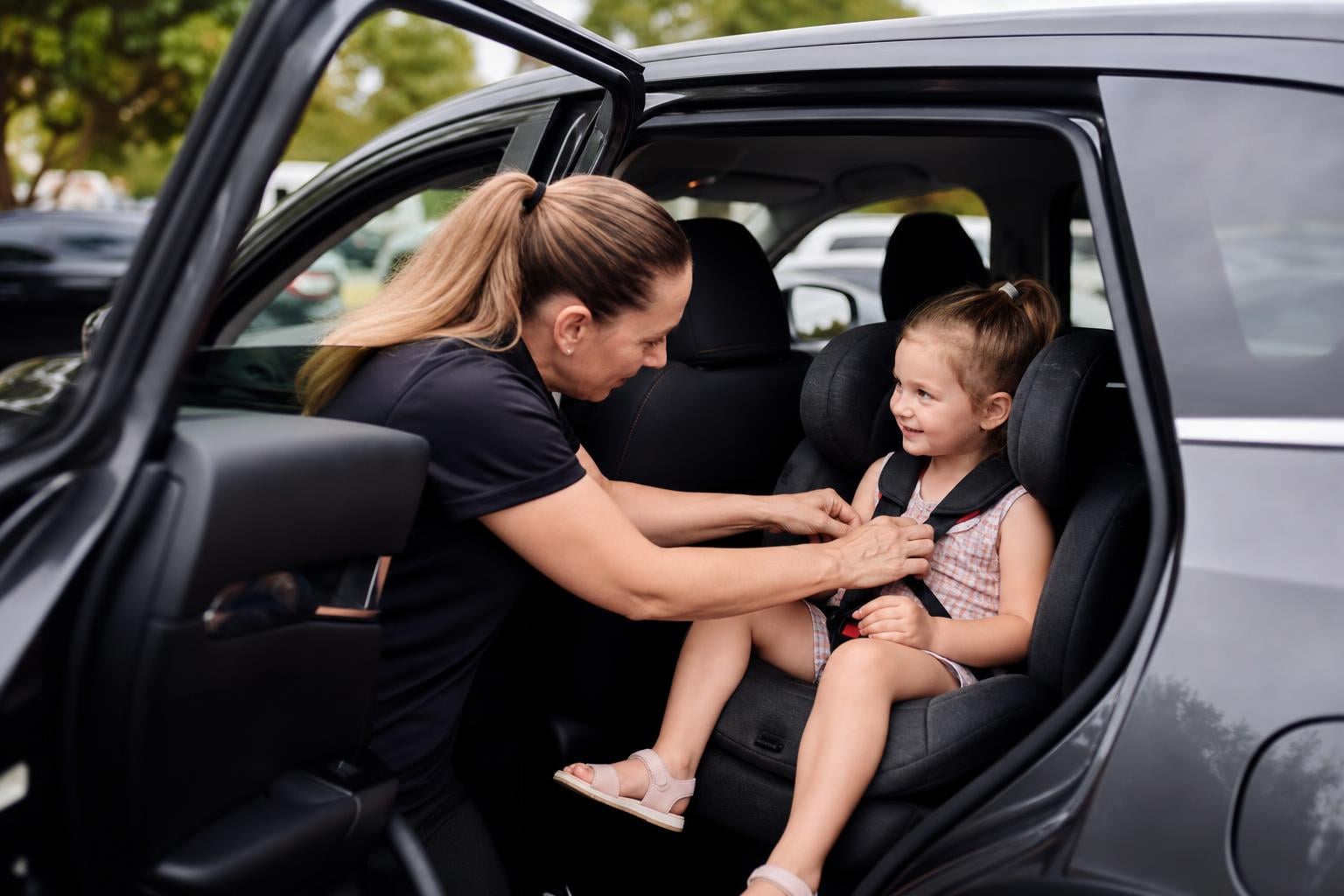
Free child car seat fitting is a no-cost service where a qualified fitter installs, checks, or adjusts your child’s car seat, capsule, or booster in your vehicle. It does not usually include a free seat. In South East Queensland, the Transurban and Kidsafe Queensland program offers free checks on Fridays at rotating Brisbane and Logan locations, but bookings are required weeks in advance. If you are not driving your own car (for example, you are catching an airport transfer), a fitting appointment is not what you need. Instead, pre-book the correct child restraint with your transport provider before your trip.
What Does “Free Child Car Seat Fitting” Actually Mean?
A free child car seat fitting is a no-cost appointment or event where a qualified child restraint fitter installs, checks, adjusts, or demonstrates how to correctly use a baby capsule, forward-facing car seat, or booster seat. These services are typically run through road safety organisations or government-backed programs.
The word “free” refers to the service, not the equipment. If a fitter finds that your restraint is too old, the wrong type for your child, damaged, or non-compliant with Australian Standards, you will likely need to buy or hire a replacement. Kidsafe Queensland notes that a restraint may fail a check if it is older than 10 years, unsuitable for the child, or does not meet AS/NZS 1754.
A fitting is especially useful when you are:
Installing a new seat for the first time
Moving a seat between vehicles
Switching from rear-facing to forward-facing, or from harness to booster
Using a second-hand or inherited restraint
Preparing for a road trip or long drive with children
Kidsafe Queensland also offers paid 30-minute Fitcheck appointments at $55 each, conducted by qualified Type One Fitters and including a full demonstration on daily use and adjustment. But the free alternative, when available, covers the same core safety check.
If you are not driving your own car but instead booking an airport transfer for a family trip, a fitting appointment is not the right solution. What you need is a transport provider that supplies a properly sized child restraint as part of the ride.
Why a Professional Fitting Matters More Than You Think
Most parents believe their child’s car seat is installed correctly. The data says otherwise.
In 2024, Transurban and Kidsafe Queensland checked 1,677 child car seats across Brisbane and Logan. Of those, 99% were incorrectly fitted. Only 12 seats out of nearly 1,700 were installed correctly.
That is not a rounding error. It is a systemic problem.
Research from NeuRA (Neuroscience Research Australia) shows that a correctly fitted child restraint, appropriate for the child’s age and size, can reduce the risk of serious injury or death in road crashes by up to 70%. But installation and use errors reduce that protection significantly. NeuRA identifies three common failure points: when the seat is installed or moved between cars, when a carer buckles the child in, and when a child interferes with the harness or sash during travel.
A child restraint is safety equipment. Think of it like a seatbelt that only works when it is the right type, properly anchored, correctly tensioned, and used consistently. A free child car seat fitting exists to close the gap between owning a seat and actually having it protect your child.
One parent on LinkedIn shared that she took her 5-year-old’s harnessed restraint to a free check and was alarmed to learn how common incorrect fittings are, then recommended the service to other parents and carers. Free fitting is not only for new parents. It is also valuable when children move to the next restraint type or when seats get swapped between family vehicles.
Where to Get a Free Child Car Seat Fitting in Brisbane or Logan
The best-known free program in South East Queensland is the Transurban and Kidsafe Queensland partnership, often called “Free Fit Friday.” This program offers free car seat checks every Friday at rotating locations across Brisbane and Logan.
Locations that have appeared in the rotation include:
Orion Springfield Central
Aspley Hypermarket
Cannon Hill Kmart Plaza
Forest Lake Shopping Centre
Rochedale Village
Logan Central Plaza
Bookings are required, and Transurban advises planning at least six weeks ahead because demand is high. Since 2018, the program has fitted almost 9,000 car seats correctly across South East Queensland.
Locations and schedules change regularly, so rather than listing specific upcoming dates here, check the current Transurban/Kidsafe Queensland booking page for the latest availability. Some local councils and community health centres also run occasional free fitting events or blitz days, but these are less frequent and usually announced through local channels.
If a free spot is not available when you need one, Kidsafe Queensland’s paid Fitcheck service is a reliable alternative at $55 for a 30-minute appointment.
What Happens During a Child Car Seat Fitting or Check
A qualified fitter will typically work through a structured inspection that covers the restraint, the vehicle, and the child. Here is what they usually check:
The restraint itself: Is it Australian Standard compliant (AS/NZS 1754 sticker present)? Is it less than 10 years old? Has it been in a crash? Is it in good condition with no cracks, fraying, or missing parts?
The match to the child: Does the seat suit the child’s age, weight, and height? Are the shoulder-height markers in the correct position?
The vehicle installation: Is the seatbelt or ISOFIX path correct? Is the top tether connected to the right anchor point (not a luggage fixing point)? Is the seat at the right recline angle?
Strap and harness condition: Are there twists in the seatbelt or harness? Is the harness snug on the child? Is the chest clip (if present) at armpit height?
Demonstration: The fitter shows you how to use, adjust, and maintain the seat for everyday use, so you can get it right after the appointment ends.
The ACCC’s car seat safety guidance warns that risk increases when a seat is installed incorrectly, the child is not restrained correctly, the seat is damaged or too old, or aftermarket accessories interfere with the restraint’s performance.
A fitting is not a DIY replacement. It is an expert check. But the education component matters just as much as the installation itself, because the seat needs to be used correctly on every single trip.
Queensland Child Restraint Rules in Plain English
Queensland law requires all children up to 7 years of age to travel in a properly fastened and adjusted child restraint that meets Australian Standard AS/NZS 1754. This rule applies to private cars and rental vehicles. Overseas restraints must not be used unless they comply with AS/NZS 1754.
Here is how the age categories break down:
Age | Required restraint | Practical note |
|---|---|---|
Birth to under 6 months | Approved rear-facing restraint | Keep rear-facing as long as the child’s size allows |
6 months to under 4 years | Rear-facing or forward-facing with built-in harness | Rear-facing is recommended for as long as possible |
4 years to under 7 years | Forward-facing harnessed restraint or approved booster with lap-sash belt | A harnessed seat may still be best if the child fits |
7 years and older | Adult seatbelt, booster, or harnessed restraint | Use the 5-step test before removing the booster |
Source: Queensland Government, types of child restraints.
Babies and children under 4 must not sit in the front seat of a vehicle with two or more rows of seats. Children aged 4 to 6 can sit in the front only if all rear seats are already occupied by children under 7. A rear-facing restraint should never be placed in front of an active passenger airbag.
Do not graduate children to the next seat type just because they had a birthday. Queensland Government and ACCC guidance both encourage keeping children in the more protective restraint for as long as their size allows. When it is time to move from a booster to an adult belt, the 5-step test checks whether the belt sits correctly across the shoulder and hips, the child’s back stays against the seat, and their knees bend at the seat edge.
The penalty for a child not properly restrained in Queensland is $1,295 and 4 demerit points, with double demerits for second or subsequent offences within one year. Fines and rules can change, so check the Queensland Government website for current details.
Child Restraints in Queensland Taxis, Ubers, and Private Transfers
This is where confusion runs highest, and where most competing pages offer almost no practical advice.
Queensland classifies taxis, limousines, and ride-booking services (including Uber) as personalised transport. These vehicles are exempt from standard child restraint laws. That means a young child can legally travel without a car seat in a taxi or Uber, as long as the child wears a seatbelt and, if under 7, does not sit in the front seat of a vehicle with two or more rows.
But “legal” and “safe” are not the same thing.
NeuRA’s research is clear: a correctly fitted, appropriate restraint reduces serious injury or death risk by up to 70%. That protection does not suddenly stop mattering because you are in a taxi. The exemption exists because taxis and rideshares cannot practically carry every size of restraint for every possible passenger. It is a practical concession, not a safety endorsement.
Practitioners on Reddit regularly surface this tension. In one Brisbane thread, multiple users were surprised to learn that Queensland taxis and rideshares have child restraint exemptions. Others warned that even when a taxi company offers a pre-booked child seat, there is no guarantee it will be the right type or correctly installed. In a separate thread about getting to Brisbane Airport with a baby, parents discussed the difficulty of juggling a capsule, pram, luggage, and an unfamiliar vehicle, with suggestions ranging from Shebah to bringing a seat on the plane.
The safest approach for families using any hired vehicle: pre-book the correct restraint type, give the provider your child’s age and approximate size, and confirm the seat before you get in the car.
For families flying into or out of South East Queensland, pre-booked private transfers with child seats arranged in advance remove the guesswork entirely.
Free Fitting vs Free Child Seat in an Airport Transfer
These are two different things, and confusing them is easy.
A free child car seat fitting is a service appointment for your own vehicle (or a rental car you bring to the appointment). It checks or installs a restraint you already own.
A free child seat with a transport booking is when a transfer provider supplies a child restraint as part of the ride. No fitting appointment is needed because the provider handles the seat.
For families who are not driving their own car, the second option is what matters. My Private Transfers offers free child and infant seats for children aged 0 to 7 years, with baby capsules available on request. Vehicles are driven by professional, government-accredited chauffeurs, and families can specify the child’s age and required restraint type at booking.
If you are travelling with a baby and managing a pram, luggage, and a capsule through a terminal, having the child seat already waiting in the vehicle is a significant practical advantage over trying to install one yourself in an airport pickup zone.
When comparing transport options, the key question for families is not just “is a child seat legally required?” but “will the right seat actually be there, and will it be fitted correctly?”
Compare family transfer pricing to see what is included before you travel.
Can Visitors Use Overseas Child Car Seats in Queensland?
No, unless the seat complies with AS/NZS 1754. Queensland explicitly states that child restraints purchased overseas must not be used unless they meet this Australian and New Zealand standard.
This catches many international visitors off guard. Travellers on Reddit frequently ask whether a US, UK, or European car seat can be used in Queensland, and the answers are consistently the same: if it does not carry an AS/NZS 1754 label, it is not legal in a private or rental car.
Practical options for visitors include:
Bringing an AS/NZS 1754-compliant restraint if you already own one
Hiring or buying a compliant restraint after arrival
Renting a car that includes an appropriate child seat
Booking a private transfer service that supplies compliant child restraints
The taxi and rideshare exemption does technically apply, meaning a visitor could ride in a taxi without a child seat. But again, the exemption is a concession for practicality, not a recommendation. If you can arrange a suitable restraint, that is the better choice.
For families arriving at Brisbane or Gold Coast airports, booking a transfer with child seats included avoids the hassle of sourcing an Australian-compliant seat while jet-lagged and managing children.
Common Mistakes a Fitting Can Catch
The 99% error rate from the 2024 Transurban/Kidsafe data is not caused by one type of mistake. It is a collection of small errors that add up. Here are the most common ones:
Top tether not connected, or attached to a luggage anchor instead of a child restraint anchor point
Seatbelt threaded through the wrong path on the restraint
Twisted straps in the harness or seatbelt
Harness too loose, allowing the child to move excessively in a crash
Wrong recline angle for a rear-facing infant seat
Shoulder-height markers ignored, meaning the child has outgrown the seat
Child moved to the next seat type too early, before they physically fit the new restraint
Booster belt sitting on the child’s neck or belly instead of across the shoulder and hips
Seat older than 10 years, even if it looks fine
No crash history known for a second-hand seat, making it impossible to confirm safety
Queensland StreetSmarts installation guidance emphasises reading both the restraint manual and the vehicle manual, avoiding any twists in belts or straps, and checking anchor points carefully.
One important detail from CREP (Child Restraint Evaluation Program): their ease-of-use ratings matter because seats that are easier to install and adjust are more likely to be used correctly. The safest seat is not just the one with the best crash-test score. It is the one that fits your child, fits your vehicle, and can be used correctly by every carer who drives with that child.
What to Bring to a Free Child Car Seat Fitting Appointment
If you have booked a free child car seat fitting, arrive prepared. Most fitters recommend bringing:
The child restraint, capsule, or booster seat
The vehicle the seat will be used in (drive to the appointment)
The child, so the fitter can check size and shoulder-height markers
The restraint’s instruction manual
Your vehicle owner’s manual (for anchor point locations)
Any known crash history or second-hand purchase details
Any accessories currently attached to the seat
Your booking confirmation
The ACCC advises against using second-hand restraints if you cannot verify their history, condition, age, or standard compliance. If you have a hand-me-down seat, bring all the information you have, and be prepared for the possibility that the fitter may recommend a replacement.
If you are not sure what to expect from a transfer versus a fitting appointment, the distinction is straightforward: a fitting is for your vehicle, while a transfer provider handles the seat in their vehicle.
How to Choose the Right Option for Your Situation
Not every family needs the same thing. Here is a quick decision framework:
If you are driving your own car: Book a free child car seat fitting or a paid Kidsafe check. Do it before a long trip, after moving seats between vehicles, or whenever you switch restraint types.
If you are hiring a rental car: Queensland child restraint rules apply to rental vehicles. Make sure the seat meets AS/NZS 1754 and is fitted correctly. A free fitting appointment can help if you are installing a seat in an unfamiliar car.
If you are using a taxi or rideshare: The Queensland exemption applies, but the safest option is still to pre-book or bring a suitable restraint where possible.
If you are booking a private airport transfer: Give the provider your child’s age and size at booking, confirm the seat type, and check the restraint before departure. Choosing a provider with a clear checklist of family-friendly inclusions saves time and stress.
Frequently Asked Questions
Is a free child car seat fitting really free?
Yes. Programs like the Transurban and Kidsafe Queensland Free Fit Friday provide free professional checks across Brisbane and Logan. Bookings are required and availability is limited, so plan ahead. If no free spots are available, Kidsafe Queensland offers paid Fitcheck appointments at $55 for 30 minutes.
Does a free fitting include a free car seat?
Usually not. The fitting or check service is free, but if your restraint is too old, non-compliant, or unsuitable for your child, you will need to buy or hire a replacement.
Are child restraints legally required in Queensland taxis and rideshares?
Queensland classifies taxis, limousines, and ride-booking services as personalised transport, and these are exempt from standard child restraint laws. Children must still wear seatbelts, and those under 7 must not sit in the front seat of a vehicle with two or more rows if no suitable restraint is available. The exemption is legal, but using a proper restraint is still the safer choice.
Can I use an overseas car seat in Queensland?
Only if it complies with AS/NZS 1754. Queensland law says child restraints purchased overseas must not be used unless they meet this standard. If your seat does not have the AS/NZS 1754 label, you need to hire, buy, or arrange a compliant alternative.
Can a child use an adult seatbelt after turning 7?
Queensland allows children aged 7 and older to use an adult seatbelt, but recommends keeping them in a booster or harnessed restraint until they pass the 5-step test. The test checks belt positioning across the shoulder and hips, the child sitting with their back flat against the seat, and their knees bending at the seat edge.
Do I need a professional fitting if my seat has ISOFIX?
Yes. ISOFIX simplifies installation, but it does not eliminate the need for correct top tether use, correct child fit, proper harness tension, and daily use checks. Queensland StreetSmarts guidance still recommends checking ISOFIX indicators, anchor points, recline angle, and shoulder markers even with ISOFIX-equipped seats.
Can I use a second-hand child car seat?
Only if you can verify it is AS/NZS 1754 compliant, under 10 years old, in good condition, has not been in a crash, and comes with its original instructions. The ACCC advises against using or buying a second-hand seat if you are unsure of its history, condition, or age.
How far in advance should I book a free fitting?
Transurban advises booking at least six weeks ahead for their free Friday checks, as demand is consistently high. If your need is more urgent, a paid Kidsafe appointment can usually be scheduled sooner.
Flying into Brisbane, the Gold Coast, or the Sunshine Coast with children? Instead of worrying about sourcing a child seat at the terminal, book a family transfer with child and infant seats included at no extra cost. Give your child’s age and size when booking, and the right restraint will be waiting in the vehicle.