

Chauffeur vs Taxi Comparison (2026): Top 5 Differences
Deciding between a quick taxi ride and a pre-booked chauffeur can significantly shape your travel experience. While a taxi is suitable for unplanned, short trips, a professional chauffeur is the clear choice for any journey where punctuality, comfort, and reliability are priorities. This isn’t just about luxury; it’s a practical decision based on your needs. Understanding the core distinctions in the chauffeur vs taxi comparison helps you choose the right service to ensure a smooth, stress-free trip, whether you’re heading to Brisbane Airport, a corporate meeting, or a special family event.
What Makes a Chauffeur Service Different?
At its core, a chauffeur service is a planned, premium experience, while a taxi is built for on-demand convenience. A chauffeur is a professionally trained driver focused not just on driving, but on overall service. This includes punctuality, etiquette, luggage assistance, and creating a comfortable environment.
Unlike the variable nature of taxis, a chauffeur service provides a consistent standard. You can expect an immaculately maintained, high-end vehicle and a driver who views their role as a career dedicated to client satisfaction. Services like My Private Transfers go further, with government-accredited chauffeurs who undergo extensive background checks, offering a higher degree of safety and professionalism. This focus on a complete, managed journey is the fundamental difference in any chauffeur vs taxi comparison.
When to Choose a Chauffeur vs a Taxi
A taxi is often practical for a quick, unplanned trip across town. However, for journeys where timing, comfort, and reliability are critical, a chauffeur is the superior choice.
Consider booking a chauffeur for:
Airport Transfers: Especially after a long flight, a chauffeur service eliminates stress. A professional meets you at the terminal, handles your luggage, and has tracked your flight for any delays, ensuring they are there when you land. This is a huge relief for families with children or business travelers on a tight schedule.
Business and Corporate Travel: Arriving at a meeting in a premium vehicle with a professional driver makes a strong first impression. Chauffeur services provide a quiet, private space to prepare for meetings or take calls, turning travel time into productive time. With corporate travel spending on the rise in Australia, reliability is paramount.
Family Travel with Children: A key advantage in the chauffeur vs taxi comparison for families is safety and convenience. While taxis in Queensland are often exempt from child restraint laws, it doesn’t mean it’s the safest option. A service like My Private Transfers offers complimentary, pre-booked child and infant seats, ensuring your children travel safely and in compliance with Queensland’s road rules for private vehicles.
Special Events: For weddings, anniversaries, or a special night out, a chauffeur adds a touch of elegance and removes worries about parking or designated drivers.
Long-Distance Transfers: For trips like Brisbane to the Gold Coast, Noosa, or Byron Bay, the fixed-price comfort of a pre-booked chauffeur is often better value than a metered taxi fare, which can fluctuate with traffic.
Chauffeur vs Taxi Comparison: Top 3 Differences
While standard taxis and ride-shares are common choices for airport transit, choosing a professional chauffeur service offers a distinct level of reliability and personalization. This chauffeur vs taxi comparison highlights the primary differences between these transport methods to help you decide which best suits your specific travel standards and schedule. Understanding these key factors ensures your journey between Brisbane or the Gold Coast is as seamless and stress-free as possible.
1. Private Transfer from Brisbane Airport to Noosa for 1 to 7 people/5 medium lugg
Your whole crew, your whole loadout, one seamless ride. Pre-book a dedicated people mover that fits up to seven passengers plus luggage, and roll north to Noosa with a fixed fare and zero on-arrival scrambling.
No queues. No surge. Just a smooth ride to the Sunshine Coast.
Chauffeur vs taxi: how it plays out
A government-accredited chauffeur tracks your flight, greets you inside the terminal with a name board, and escorts you straight to a right-size vehicle reserved for your group. With our fixed-fare service, there’s no meter or surge, and no risk of splitting the group across multiple taxis. Optional enclosed trailers swallow surfboards and golf bags, while 24/7 coverage across SEQ keeps your plans on schedule.
What’s included
Fixed fare with Price Match Guarantee; no surge pricing
Terminal Meet & Greet, flight tracking, and included wait time
Optional enclosed luggage trailer for boards or clubs
Government-accredited chauffeur; insured vehicle
24/7 pre-booked availability via online booking
Best for
Families and groups traveling with surfboards, golf bags, or multiple suitcases who want a guaranteed vehicle and unified arrival.
Bottom line
Pre-book to lock in space, safety, and a single fixed price, so your Noosa holiday starts the moment you land.
2. Private Transfer Brisbane Airport to Gold Coast 4-6 Passengers
Glide from BNE to the Gold Coast in a roomy people mover sized for your group and luggage at a fixed price that won’t budge with traffic or demand.
Skip the rank, dodge the surge, and arrive together in comfort.
Chauffeur vs taxi: how it plays out
Pre-booking secures a professional chauffeur with a vehicle configured for 4 to 6 passengers and confirmed boot space. Your driver tracks your flight, meets you inside the terminal, and includes waiting time. This means no meter anxiety, no scrambling for a maxi, and no surge premiums. Accredited drivers and premium, fully insured vehicles deliver a consistent standard across the Brisbane to Gold Coast corridor, a journey of approximately 78 km by car between the Gold Coast and Brisbane City, 24/7.
What’s included
Fixed fare pricing; no meter or surge
Terminal Meet & Greet with flight tracking and included wait time
Free child seats (for ages 0 to 7) on request
Optional enclosed luggage trailer for bulky gear
Government-accredited chauffeurs; insured vehicles
24/7 pre-booked availability
Best for
Families, surf crews, and corporate teams who need guaranteed space and coordination from airport to hotel or event.
Bottom line
Reserve once, ride together, and arrive on budget without airport delays or fare surprises.
3. Private Transport from Brisbane Airport to Brisbane City
Touch down and head straight to the CBD with no rank lines and no fare guesswork. Your driver is waiting inside arrivals with a fixed, all-inclusive price.
Off the plane and into a reserved car in minutes.
Chauffeur vs taxi: how it plays out
A pre-booked, TMR-accredited chauffeur monitors your flight, greets you at the terminal, and guides you to priority parking for a swift exit. Unlike metered taxis or ride-hails that add tolls, airport fees, and surge pricing, private transfers keep the fare fixed regardless of traffic. Service runs 24/7 across Brisbane and wider SEQ for early red-eyes and late landings alike.
What’s included
Fixed all-inclusive fare; no meter or surge
Terminal Meet & Greet with included wait time
Government-accredited drivers; insured premium vehicles
Pre-fitted child seats (for ages 0 to 7) on request
Large vehicles and luggage trailers available for groups
24/7 availability for early or late schedules
Best for
Business travelers, families, and groups with extra luggage who value time certainty and terminal assistance.
Bottom line
Choose a private transfer for a fast, reliable CBD run with total price certainty and professional support from gate to hotel.
Booking and Preparation Tips
The booking process highlights a major difference in the chauffeur vs taxi comparison. Hailing a taxi is spontaneous, but it comes with uncertainty, especially during peak hours or bad weather. Pre-booking a chauffeur provides certainty and peace of mind.
Here are a few tips for a seamless experience:
Book in Advance: Especially for airport transfers or during holidays, book your private car service ahead of time. This guarantees availability and often secures a better rate, avoiding the surge pricing common with on-demand services.
Provide Clear Details: When booking, provide your flight numbers, accurate pickup and drop-off addresses, and the number of passengers. If traveling with children, specify their ages to ensure the correct child seats are fitted.
Specify Your Needs: Need extra luggage space? Companies like My Private Transfers offer vehicles with luggage trailers. Mention any special requests, like Wi-Fi or a preferred route, when you book.
Confirm Everything: Reputable services send a confirmation with the driver’s details and pickup instructions. Review it to ensure everything is correct. Knowing these details beforehand adds a layer of security.
Conclusion
Ultimately, the chauffeur vs taxi comparison comes down to your priorities. For a simple, last-minute ride, a taxi can suffice. But for any journey where punctuality, comfort, safety, and a stress-free experience are important, a professional chauffeur service is the clear winner.
The value of a pre-booked service lies in its reliability and personalized care. From a dedicated meet-and-greet at Brisbane Airport to the provision of free child seats for a family trip to the Sunshine Coast, a chauffeur provides more than just a ride; they deliver peace of mind. By planning ahead, you transform your transfer from a potential source of stress into a comfortable and seamless part of your journey.
Ready for a truly stress-free transfer? Get an instant quote and book your private, professional ride with My Private Transfers today.
Frequently Asked Questions (FAQs)
Is a chauffeur more expensive than a taxi?
While a chauffeur service may have a higher base rate, it often provides better overall value. The price is typically fixed and all-inclusive, covering things like waiting time, flight tracking, and luggage assistance, which can be hidden costs with a metered taxi. When you consider the superior vehicle quality, reliability, and professional service, the chauffeur vs taxi comparison often favors the value of a chauffeur for important trips.
Are chauffeurs safer than taxi drivers?
Chauffeur services generally prioritize safety through more rigorous standards. Chauffeurs are often required to undergo extensive background checks, advanced driver training, and regular vehicle inspections. In contrast, while taxis must meet basic transport regulations, the level of vetting and training can vary.
What is the main benefit of booking a chauffeur for an airport transfer?
The main benefit is reliability and reduced stress. A chauffeur tracks your flight and adjusts the pickup time accordingly, provides a meet-and-greet service inside the terminal, and assists with your luggage. This removes the uncertainty of waiting in taxi queues or trying to find a driver after a long flight.
Can I get a child seat in a taxi in Queensland?
While you can travel in a taxi without a child seat in Queensland due to an exemption, it is not the safest method. Taxis are not required to provide child restraints. A key advantage for a private chauffeur service like My Private Transfers is the ability to pre-book a vehicle with the correct, properly installed child or infant seats at no extra cost, ensuring your child’s safety.
Is the pricing for a chauffeur fixed?
Yes, one of the significant advantages in a chauffeur vs taxi comparison is transparent, fixed pricing. Reputable chauffeur companies provide an all-inclusive quote before you book, so there are no surprises from traffic delays or route changes. Taxis, on the other hand, use a meter, and the final cost can increase due to traffic or detours.

Chauffeur vs Rideshare Comparison 2026: Costs, Safety & Tips
Choosing how to get from point A to B has never been more complicated. Do you pull out your phone and book an on demand ride, or do you opt for the classic comfort of a pre booked chauffeur? This decision is at the heart of the modern travel debate. A detailed chauffeur vs rideshare comparison reveals that the right choice often depends on your priorities, whether it’s budget, convenience, or peace of mind.
Rideshare apps offer incredible convenience for spontaneous trips, but they come with variability in pricing and service. Chauffeur services, on the other hand, provide a premium, reliable experience that you can count on, especially for important journeys like airport transfers. Let’s break down the key differences to help you decide.
The Money Talk: A Comparison of Costs and Pricing
Price is often the first thing people consider. However, the cheapest upfront option isn’t always the most cost effective in the end. The chauffeur vs rideshare comparison for pricing is more complex than you might think.
Fare Structure: How Your Ride Is Calculated
Rideshare services use a dynamic upfront pricing model. The app calculates a fare based on distance, estimated time, and current demand. It’s convenient, but the underlying calculation is complex.
Taxis traditionally use a metered fare. This includes a starting fee (flag fall), a rate per kilometer, and a rate for time spent waiting in traffic. Private chauffeur services, like My Private Transfers, typically offer a fixed fare quote when you book. This means the price you are quoted is the price you pay, regardless of traffic jams or route changes. This predictability is a major advantage.
Surge Pricing: The Unpredictable Price Hike
Surge pricing is rideshare’s most notorious feature. When demand outpaces the supply of drivers, prices can increase significantly. A ride that normally costs $30 could easily become $60 or more during peak hours, after a concert, or during bad weather. This is another reason pre-booked pricing can help you budget with confidence. For an airport trip, Upgraded Points’ 2023 study reports round‑trip Uber costs between city centers and major U.S. airports vary widely—for example: $193.94 at JFK, $113.88 at IAD, and $35.18 at BOS (round trip). This variability makes budgeting for a rideshare trip difficult.
Chauffeur services and private transfers do not use surge pricing. Your pre booked rate is locked in, offering a predictable and often more relaxing financial experience.
Airport Surcharges and Hidden Fees
Most transportation services pass airport access fees on to the customer. At Brisbane Airport, this can be a fee of $4.86 is added to both rideshare pickups and taxi fares collected from Brisbane Airport. While these are usually included in the final fare, private transfer services often build all these fees, including tolls and parking for meet and greet services, into their initial quote for total transparency.
The Onboard Experience: Service, Comfort, and Safety
Beyond cost, the quality of your journey is paramount. This is where the chauffeur vs rideshare comparison often tilts heavily in one direction.
Driver Standards, Licensing, and Background Checks
Your safety is in the driver’s hands. Professional chauffeur services pride themselves on their high driver standards. In Queensland, for instance, professional drivers must obtain a Passenger Transport Driver Authorization, which involves a government mandated criminal history check, a driving record review, and a medical fitness test. Companies like My Private Transfers ensure all their chauffeurs are government accredited, providing a guarantee of professionalism and safety.
While rideshare platforms also conduct background checks, the standards and consistency can vary. A chauffeur is a career professional dedicated to providing excellent service, whereas a rideshare driver may be doing it as a casual gig.
Vehicle Quality and Cleanliness
With a rideshare, the vehicle you get is often a matter of luck. It could be a clean, late model sedan or an older, less comfortable car. Chauffeur services maintain a fleet of high quality, premium, reliable vehicles that are meticulously cleaned and maintained. You can expect a comfortable, smooth, and spotless ride every time. For travelers who value that extra comfort, many services offer upgrades to luxury European vehicles.
Amenities and Added Services
Chauffeur services are built around enhancing the passenger experience, whether you’re heading to the airport or planning day trips and tours. It’s common to find complimentary bottled water, and some even offer Wi‑Fi on request. These small touches make a big difference, especially on longer trips. While some rideshare drivers offer extras, it’s not a standard feature.
A key differentiator for families is child seat availability. Most rideshare services and taxis do not provide child seats, and drivers may legally refuse a ride if a child doesn’t have the proper restraint. This is a huge pain point for traveling families, especially those traveling with infants, who benefit from guaranteed child restraints with a private transfer. In contrast, family focused services like My Private Transfers provide free, professionally fitted child and infant seats, ensuring safety and convenience.
The Logistics: Booking, Waiting, and Arriving
How you book your ride and how smoothly the logistics are handled is a critical part of the chauffeur vs rideshare comparison and can make or break your travel day.
Booking Method and Service Availability
Rideshares revolutionized on demand travel through convenient apps. By 2025, about 7.4 million Australians were using Uber, compared to 4.2 million using taxis, highlighting the popularity of app based booking. This is perfect for spontaneous trips.
However, for critical journeys like an early morning flight, that on demand model has its limits. Rideshare availability can be spotty during late night or early morning hours. You might face long wait times or find no cars at all. However, even with pre-booking, some chauffeur services state that availability at any given time or location is not guaranteed. This reliability is why many prefer to get an instant quote and book online ahead of time.
Wait Time and Reliability
The average wait time for a rideshare in a city is often about 4.8 minutes in New York City (January 2022). But that’s not a guarantee. In fact, professional drivers aim to arrive about 15 minutes early, so they are waiting for you, not the other way around.
Reliability is another crucial point in the chauffeur vs rideshare comparison. Last minute cancellations by rideshare drivers can be a major source of stress. Pre booked private transfers have a much higher reliability rate because a specific driver is assigned to your job. This is reflected in customer satisfaction; for instance, My Private Transfers holds a 5.0 rating on TripAdvisor with over 200 reviews, a testament to their dependability.
The Airport Run: A Special Case for Chauffeurs
Nowhere are the differences clearer than in the airport transfer experience.
Pickup Convenience and Meet and Greet Service
At most airports, rideshare passengers must walk to a designated pickup area, which can be a confusing trek after a long flight. You then have to scan a crowd of cars to find your ride.
A chauffeur service offers a seamless alternative with a meet and greet service. Your driver will be waiting for you inside the terminal, often at baggage claim or the arrivals hall, holding a sign with your name. This personal welcome eliminates stress and confusion, making it a far superior experience, especially for those unfamiliar with the airport.
Flight Monitoring
Flights get delayed. It’s a fact of travel. A key service offered by chauffeurs is flight monitoring. You provide your flight number, and your driver tracks your arrival in real time, adjusting the pickup time accordingly. If your flight is an hour late, they’ll be there an hour later at no extra charge. Rideshare services do not offer this, meaning a delay could lead to a canceled ride or waiting fees.
Door to Door Service and Trip Duration
While both services offer door to door transport, a chauffeur provides a truly direct and efficient journey. A trip from Brisbane Airport to the city center can take as little as 20 minutes by private car in good traffic. There are no surprise stops or detours, ensuring the trip duration is as short as possible.
Handling Special Requirements: Groups and Luggage
The chauffeur vs rideshare comparison extends to how well each service handles non standard needs.
Group Suitability
For groups larger than four, a standard rideshare won’t work. While options like UberXL exist for up to 6 passengers, coordinating multiple cars for larger groups can be a hassle. Private transfer companies can supply a range of vehicles, from people movers to minibuses, ensuring your entire party can travel together.
Luggage Capacity and Assistance
A standard sedan can typically fit two large suitcases. If you have more, you risk your ride not being able to accommodate your luggage. Professional services not only provide vehicles with larger capacity but also solutions like an optional enclosed luggage trailer for bulky items like surfboards or extra bags.
Furthermore, a chauffeur will provide luggage assistance, helping you load and unload your bags. This small act of service is a huge relief after a tiring journey.
Conclusion: Making the Right Choice for Your Trip
Ultimately, the chauffeur vs rideshare comparison comes down to your specific needs.
Choose Rideshare For: Spontaneous, short trips around the city where budget is the top priority and you can tolerate some variability.
Choose a Chauffeur For: Airport transfers, business travel, family trips with children, special occasions, or any time when reliability, comfort, and peace of mind are non negotiable.
For a journey that is predictable, comfortable, and completely stress free, the superior service of a professional chauffeur is unmatched.
Frequently Asked Questions
1. Is a chauffeur always more expensive than a rideshare?
Not necessarily. While the base rate for a chauffeur may be higher, a rideshare fare during surge pricing can easily exceed the cost of a pre booked private car. For a true chauffeur vs rideshare comparison on price, it’s best to get a fixed quote for your specific trip.
2. Can I get a child seat in an Uber or other rideshares?
Generally, no. In Australia, rideshare drivers are not required to provide child seats, and you are expected to bring your own. Many private transfer services, however, offer complimentary, professionally fitted child and infant seats upon request.
3. What is better for a 4 AM airport trip: a chauffeur or a rideshare?
For very early or late trips, a pre booked chauffeur is far more reliable. Rideshare availability can be very limited at these hours, leading to long waits or no available cars. A chauffeur is guaranteed to be there at your scheduled time.
4. How does the chauffeur vs rideshare comparison change for group travel?
For groups, a pre booked private service is often more convenient and cost effective. Instead of ordering multiple rideshares, you can book a single van or minibus to accommodate everyone and their luggage together.
5. What is a “meet and greet” service and do rideshares offer it?
A meet and greet service is when your driver waits for you inside the airport terminal with a name sign. This premium service is a key feature of chauffeur companies and is not offered by standard rideshare services, which require you to find them at a designated outdoor pickup zone.
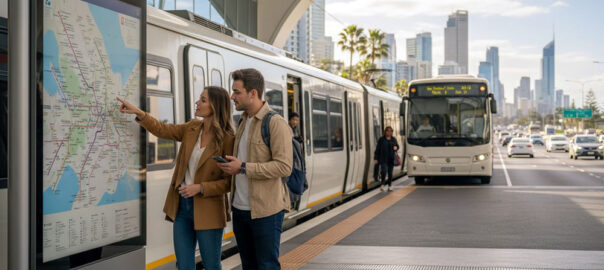
Surfers Paradise to Brisbane: 8 Best Ways (2026 Guide)
Getting from Surfers Paradise to Brisbane is straightforward, with the 80 kilometre journey typically taking 60 to 120 minutes by road or rail. Key options include driving, trains, buses, and private cars. Whether you’re heading to Brisbane CBD for business, catching a flight from Brisbane Airport (BNE), or connecting to another destination, understanding your transport choices is key. This guide breaks down the best ways to travel from Surfers Paradise to Brisbane, helping you choose the perfect method for your budget, schedule, and comfort level.
Key Facts At A Glance
Before diving into the options, here are the essential details for your trip planning.
Distance: Approximately 80 kilometres (about 50 miles).
Typical Driving Time: 60 to 90 minutes in clear traffic. This can extend significantly during peak hours or holiday periods.
Public Transport Time: Roughly 2 hours, including transfers from Surfers Paradise to the train station.
Main Road: The Pacific Motorway (M1) is the direct road link connecting the Gold Coast and Brisbane.
Primary Destinations: Brisbane CBD, Brisbane Domestic Airport, and Brisbane International Airport.
How The Route Works: Road and Rail Connections
The journey from Surfers Paradise to Brisbane primarily follows two main corridors: road and rail.
By road, the most direct path is via the M1 Pacific Motorway. This multi lane highway is the main artery connecting the two cities. All road based transport, from private cars to buses, uses this route.
By rail, you cannot get a train directly from Surfers Paradise. The Gold Coast light rail (G:link) or a local bus connects you to a main train station like Helensvale, Nerang, or Robina. From there, Queensland Rail trains run regularly to Brisbane’s Central, Roma Street, and Airport stations. This option involves multiple connection points.
Top 6 Surfers Paradise to Brisbane Travel Options
Choosing the best way to travel between these two iconic Queensland destinations depends entirely on your budget, schedule, and preferred level of comfort. This comprehensive list explores the most reliable transport methods available, ranging from cost-effective public transit to premium private transfers. Whether you prioritize speed or a touch of luxury, these eight options ensure a seamless journey from the heart of the Gold Coast to the state capital.
1. Private Driver
A premium, pre-booked car with a professional chauffeur takes you directly from your Surfers Paradise address to Brisbane CBD or Brisbane Airport. It’s fully door-to-door, with no transfers or detours, just a smooth run up the M1 in a clean, late-model vehicle.
At a glance
Travel time: 70 to 90 minutes; in heavy peak traffic, allow up to ~2 hours.
Frequency/operating hours: 24/7 by appointment; drivers track live flight data for arrivals.
Price: $180 to $320 for sedans; $250 to $450 for SUVs/vans per vehicle (fixed, incl. tolls).
Booking: Reserve via company websites/apps; 12 to 24 hours’ notice recommended; instant quotes and flexible cancellations common.
Best for: Business travelers who value punctuality, families needing child seats, groups with oversized luggage.
Pros: True door-to-door ease, professional meet-and-greet, predictable fixed pricing.
Cons: Higher cost than rideshare or transit; benefits most from advance planning.
Smart tip: For international departures, schedule pickup about 3.5 hours before your flight to buffer unpredictable morning M1 congestion.
2. Train
Go from Surfers Paradise to Helensvale on the G:link tram, then transfer to the Gold Coast line for Brisbane City, or continue on the Airtrain to Brisbane Airport. It’s not door-to-door, but it’s straightforward, affordable, and avoids motorway delays.
At a glance
Travel time: 90 to 110 minutes to Brisbane CBD; around 140 minutes to Brisbane Airport.
Frequency/operating hours: Trams every 7.5 to 15 minutes; trains about every 15 minutes at peak.
Price: Low per-person go card/contactless fare to CBD; Airtrain to the airport adds a ~$20+ surcharge.
Booking: No pre-booking; simply tap on/off with a go card or contactless. Plan in real time with the MyTranslink app.
Best for: Budget-conscious solo travelers, students, and commuters comfortable managing luggage through stations.
Pros: Wallet-friendly and immune to M1 traffic.
Cons: Requires transfers; can be crowded at peak; not door-to-door.
Smart tip: Open the MyTranslink app on the tram to check live platform info and minimize connection times at Helensvale.
3. Bus
Long-distance coaches like Greyhound and Premier Motor Service run point-to-point from Surfers Paradise Transit Centre to Brisbane (Roma Street) and some services extend to the airport. You’ll skip the Helensvale transfer, though it’s not a door-to-door option.
At a glance
Travel time: 80 to 120 minutes, depending on M1 congestion.
Frequency/operating hours: Typically 4 to 6 services daily, roughly 7:00 AM to 7:00 PM.
Price: $25 to $48 per person; one 20 kg checked bag usually included (oversize may cost extra).
Booking: Buy on operator websites for instant e-tickets; pre-book busy periods; flexible “Advantage” style fares often available.
Best for: Solo travelers and backpackers carrying heavier bags who prefer a single vehicle ride.
Pros: On-board Wi-Fi and reclining seats; large under-bus luggage holds.
Cons: Fixed schedules and potential M1 delays.
Smart tip: If flying, choose a service that serves airport terminals to avoid an extra transfer from Brisbane CBD.
4. Shuttle Service
Shared shuttles offer door-to-door transfers between Surfers Paradise and Brisbane CBD or the airport. You’ll travel the M1 in a comfortable minibus and skip station transfers, with the trade-off of a few extra pick-ups and drop-offs.
At a glance
Travel time: 90 to 120 minutes, depending on traffic and intermediate stops.
Frequency/operating hours: Hourly departures from about 6:00 AM to 6:00 PM; limited early/late runs.
Price: $55 to $68 per adult; family bundles/child discounts common; oversize items or trailers may add fees.
Booking: Reserve via operator sites or hotel tour desks 24 to 48 hours ahead; instant confirmation; many offer 24-hour cancellation.
Best for: International visitors with luggage, families wanting door-to-door simplicity, safety-minded solo travelers.
Pros: Convenient hotel-to-terminal service and professional drivers.
Cons: Multiple stops can add time; operates on set timetables.
Smart tip: For overseas flights, aim to arrive at BNE three hours early; weekday peaks can slow the motorway more than expected.
5. Taxi
A classic, private, door-to-door ride straight from your Surfers Paradise pickup to Brisbane City or the airport. Expect a direct motorway run with no transfers and plenty of space for your luggage.
At a glance
Travel time: 60 to 95 minutes; in heavy peaks, it can exceed two hours.
Frequency/operating hours: 24/7 on demand via ranks, phone, or apps.
Price: Typically $220 to $310 per vehicle, incl. levies/tolls; final fare depends on traffic and destination.
Booking: Use the 13cabs or Black & White Cabs apps for tracking and price features, or call 13 22 27 for dispatch.
Best for: Families (request child seats), business travelers, groups with large bags or boards.
Pros: Always-on availability, private cabin, true door-to-door.
Cons: Among the priciest road options and subject to M1 delays.
Smart tip: Book a Maxi Taxi for 5 to 10 passengers; splitting the fare often beats individual shuttle tickets per person.
6. Flight
When time is paramount, a private helicopter from Main Beach or a light aircraft from Gold Coast Airport can deliver you to Brisbane swiftly. There’s no scheduled commercial route; this is a bespoke charter that completely sidesteps the M1.
At a glance
Travel time: 20 to 30 minutes of flight; plan ~75+ minutes end-to-end with briefings and ground transfers.
Frequency/operating hours: On-demand, subject to pilot/aircraft availability and daylight rules.
Price: $1,800 to $5,000+ per charter (up to ~6 passengers); landing/handling fees apply.
Booking: Arrange via private aviation providers or concierge; full prepayment and strict cancellation terms are typical.
Best for: Time-sensitive executives, luxury travelers, milestone trips.
Pros: No road traffic, stunning vistas, total privacy.
Cons: Very expensive, weather-dependent, tight luggage weight limits.
Smart tip: Confirm whether you’ll land at Archerfield or BNE; either way, allow ~20 minutes by car to reach Brisbane CBD.
Practical Tips for a Smooth Trip
A little planning can make your journey from Surfers Paradise to Brisbane completely seamless.
Book in Advance: Especially during school holidays, long weekends, or for early morning flights, securing your transport ahead of time is crucial. Services like a pre booked private transfer guarantee a vehicle is waiting for you.
Travel Outside Peak Hours: The M1 is notorious for congestion during weekday morning (6:30 AM to 8:30 AM) and afternoon (4:00 PM to 6:00 PM) commutes. If you can, travel in the middle of the day for a faster trip.
Consider Your Luggage: If you have multiple large bags, surfboards, or golf clubs, a standard car may not be sufficient. A private transfer service like My Private Transfers offers vehicles with optional luggage trailers to handle oversized gear with ease.
Travelling with Children: Remember that Australian law requires children under 7 to be in an approved child restraint. Finding a taxi with the correct seat can be difficult. For peace of mind, choose a family focused service that provides complimentary, pre installed child and baby seats.
Confirm Your Brisbane Drop Off Point: Brisbane is a sprawling city. Ensure your driver knows if you are going to a specific hotel, the cruise terminal, or the correct airport terminal (Domestic or International) to avoid confusion.
Important Notes on Prices and Schedules
The cost and timing for your trip from Surfers Paradise to Brisbane can vary widely based on the option you choose.
Public transport offers fixed fares and reliable schedules, but it is the slowest method and requires transfers. Rideshare apps use dynamic pricing, meaning fares can surge dramatically based on demand, traffic, or the time of day.
For budget certainty, a pre booked private car service provides a fixed quote upfront. You know the exact cost before you get in the car, with no surprise fees. Reputable local companies offer competitive rates, and some even provide a Price Match Guarantee against other accredited operators, ensuring you get a fair deal for a premium, door to door service. You can get an instant online quote from My Private Transfers to see your fixed price in minutes.
Conclusion: Choose The Right Option For Your Needs
Choosing how to get from Surfers Paradise to Brisbane depends entirely on your priorities. Public transport is budget friendly for solo travellers with light luggage, while rideshare offers on demand convenience. However, for reliability, comfort, and a stress free experience, nothing beats a private transfer.
With a dedicated professional chauffeur, guaranteed space for your family and luggage, and a fixed price locked in, a private car service ensures your journey is as relaxing as your holiday. It is the ideal solution for airport departures, corporate travel, and families who value safety and predictability.
Ready to book a seamless journey? Visit My Private Transfers for an instant quote and experience the most comfortable way to travel.
FAQ: Surfers Paradise to Brisbane
What is the fastest way to get from Surfers Paradise to Brisbane Airport?
The fastest way is typically a direct private transfer or driving your own car, taking 60 to 90 minutes without traffic. This avoids any delays from waiting for other passengers or making multiple stops, which are common with shared shuttles or public transport.
How much does a private transfer from Surfers Paradise to Brisbane cost?
The cost varies depending on the vehicle type, time of day, and exact destination. However, a private sedan transfer often starts from around $159. For a precise, fixed price, it is best to get an instant online quote.
Can I get a transfer with a baby seat?
Yes. Reputable private transfer companies like My Private Transfers provide complimentary, professionally fitted baby capsules and child seats for children aged 0 to 7 years, ensuring compliance with Australian safety laws. This is a key advantage over standard taxis or rideshare services.
Is there a direct train from Surfers Paradise to Brisbane?
No, there is no direct train. You must first take the G:link tram or a bus from Surfers Paradise to a train station such as Helensvale or Nerang. From there, you can catch a direct train to Brisbane.
How do I get from Surfers Paradise to Brisbane late at night?
Your best options for late night travel are pre booked private transfers or rideshare services. Private transfers are often preferred as they can be scheduled for any time 24/7, guaranteeing a driver will be waiting for you, whereas rideshare availability can be limited in the early hours of the morning.
Is it better to take a shuttle bus or a private car?
A private car offers a faster, more comfortable, and more convenient journey. You have the vehicle to yourself, travel on your own schedule, and go directly to your destination. A shuttle bus is more economical but involves sharing with other passengers, making multiple stops, and a longer travel time.

How to Arrange Transport for Medical Appointment Travel
Getting to a medical appointment can be stressful, especially when it involves travelling a long way from home. Learning how to arrange transport for medical appointment travel involves verifying your eligibility for travel subsidies, applying for funding, and booking the right service for your needs. For many Australians, particularly the 42,000 people in regional areas with no local primary healthcare within a 60-minute drive, this process is essential. This guide will walk you through each step, from understanding subsidies to booking your ride, so you can focus on what matters most: your health.
Plan Your Medical Appointment Travel
Planning your medical journey means organising all the details to get you to and from your healthcare appointment safely and on time. This is more than just booking a ride. It involves coordinating transport, arranging accommodation if you need to stay overnight, securing funding, and making sure everything aligns with your appointment schedule.
Effective planning is critical. For instance, preventable hospitalisations in remote areas happen at two to three times the rate of major cities, partly due to the challenges of accessing care. Getting your travel sorted well in advance gives you time to explore all your options, from public transport to community shuttles or even a comfortable private car, and find the one that best suits your needs.
Verify Your Eligibility for a Travel Subsidy
If you need to travel a significant distance for specialist medical care, you might be eligible for financial help. In Australia, each state and territory has a patient travel assistance program to help cover travel and accommodation costs. These are known by different names, such as the Patient Travel Subsidy Scheme (PTSS) in Queensland or the Patient Assisted Travel Scheme (PATS) in other states.
While the specifics vary, common eligibility criteria usually include:
A medical referral: Your doctor must refer you to a specialist service that isn’t available locally.
Travel distance: You typically need to travel a minimum distance, often 50 km or 100 km, from your nearest public hospital.
Residency: You generally must be a resident of the state and eligible for Medicare.
If you think you might qualify, it is always best to check with your local hospital’s patient travel office before you travel.
Apply for PTSS or PATS Funding
Applying for funding is a straightforward process that can save you a significant amount of money. For Queensland’s PTSS, it generally involves these steps:
Register: You’ll fill out a registration form (Form A in Queensland) and submit it to the patient travel office at a public hospital. This is a one time setup.
Get a Referral: Your referring doctor completes a travel referral form (Form B in Queensland) that confirms your medical need to travel. You submit this form to the patient travel office as well.
Get Approval: The health service reviews your application. Once approved, they will help you with bookings or give you an approval number. It is vital to apply as early as you can to allow time for processing.
Claim After Travel: If you have already travelled, you can often make a retrospective claim. In Queensland, you have up to 12 months after your trip to lodge your claim.
Queensland spent over $84.24 million on the PTSS in 2022-23, helping thousands of patients access care. It’s a valuable resource worth looking into.
Book Non Urgent Ambulance Transport
For patients who need medical support during their journey but are not in an emergency, non urgent ambulance transport is an option. This is a pre scheduled service for those who cannot travel by car or public transport for medical reasons.
To qualify, a doctor must provide a signed transport request. In Queensland, you must meet at least one of these criteria:
You need a stretcher because you cannot sit upright.
You require active medical monitoring during the trip (e.g., oxygen therapy).
Your condition would cause distress to yourself or others on public transport.
This service is free for all Queensland residents. However, if you don’t meet the strict medical criteria, you’ll need to explore other ways to get to your appointment. For many people in this situation, booking a reliable private car service provides a comfortable and stress free alternative.
Arrange Your Booking Through a Healthcare Facility
Many hospitals have staff, like Patient Transport Officers or social workers, who can help you figure out how to arrange transport for medical appointment travel. They can assist with subsidy applications and book approved travel on your behalf, such as flights, buses, or non urgent ambulance services.
This is especially common for:
Patients being transferred between hospitals.
Dialysis or oncology patients who have regular, recurring appointments.
Rural patients travelling long distances under a subsidy scheme.
Booking through your healthcare facility can reduce your administrative burden, as they handle the logistics. However, they generally arrange transport only when medical support is needed or as part of a subsidy program. If you need a simple ride at a specific time, you may need to arrange it yourself.
Provide the Right Patient Information for Your Booking
When you book any form of medical transport, providing clear and accurate information is essential to ensure a smooth trip. Be prepared to share the following details:
Personal details: Your full name, date of birth, and contact number.
Trip details: The exact pickup and drop off addresses, including the hospital name and specific department or entrance.
Appointment time: The date and time you need to arrive at your appointment.
Mobility needs: Let them know if you use a wheelchair, walker, or require any assistance. This helps them send the right vehicle.
Escort details: Inform them if a carer or family member will be travelling with you.
Giving precise information prevents confusion and delays, ensuring your driver knows exactly where to go and what support you need.
Confirm Pickup, Drop off, Date, and Time
The core details of your journey are the when and where. Double checking these is one of the most important steps in learning how to arrange transport for medical appointment travel.
Pickup Location: Provide the full street address, and for large facilities, the specific building, entrance, or clinic name.
Drop off Location: Be just as specific with your destination address to help the driver plan the best route.
Date of Travel: Confirm the date, especially if your trip is overnight or crosses midnight.
Time: Plan to arrive at your appointment at least 15 to 30 minutes early to account for traffic or check in procedures. If you’re booking a private car, you can set the exact pickup time. For shared services, you will likely be given a pickup window.
If any of your appointment details change, remember to update your transport provider immediately.
Arrange Escort or Carer Support
Travelling with an escort, such as a family member, friend, or carer, can provide crucial physical and emotional support. An escort can help with navigation, mobility, and communication, which is especially important for patients who are frail, have cognitive issues, or are minors.
Most patient travel subsidy schemes recognise this need and will cover the travel costs for one approved escort if a doctor confirms the patient cannot travel alone safely. When booking your transport, always mention that an escort will be accompanying you so the provider can account for the extra person. If you choose a private vehicle, bringing an escort along typically doesn’t add to the cost, as you are paying for the car, not per person.
Prepare Your Documentation and Medication for the Trip
Being organised with your paperwork and medications will help your trip go smoothly. Before you leave, gather the following essentials:
Key Documents
Photo ID, Medicare card, and any private health or concession cards.
Appointment confirmation letters and your doctor’s referral.
Any travel subsidy approval forms you need to have signed.
A list of your current medications, dosages, and any allergies.
Emergency contact information.
Medication Prep
Pack enough medication for your entire trip, plus a few extra days’ supply in case of delays.
Keep all medications in your carry on luggage in their original packaging.
Bring copies of your prescriptions.
Pack any necessary medical supplies or devices, along with spare batteries or chargers.
Keeping everything in a dedicated folder can make a real difference, reducing stress and ensuring you have everything you need at your fingertips.
Select Accessible Transport for Mobility Aids
If you use a wheelchair, scooter, or walker, you will need to arrange accessible transport. Around one in seven Australians with a disability uses a mobility aid, so there are several options available designed to meet these needs.
Wheelchair Accessible Taxis (WATs): These are modified vans with ramps or lifts that can be booked through taxi companies.
Community Transport: Many local councils and charities operate wheelchair accessible vans for community members.
Private Services: While not all private car services have wheelchair lifts, many can accommodate foldable wheelchairs and walkers. For bulkier items, a company like My Private Transfers can provide an enclosed luggage trailer, ensuring your mobility aid travels safely with you.
When booking, clearly state your specific mobility needs to ensure the provider sends a suitable vehicle.
Use Community Transport or a Taxi Subsidy
For those who have difficulty using public transport, community services and subsidy programs can be a lifeline.
Community Transport: Run by local organisations, these services offer low cost or free door to door rides to medical appointments. They are often staffed by volunteers and typically require you to book in advance.
Taxi Subsidy Schemes: Every state offers a program to help people with severe and permanent disabilities afford taxi travel. For example, Queensland’s Taxi Subsidy Scheme covers 50% of the fare up to a set cap, making essential travel more affordable.
These programs are designed to fill transport gaps and ensure everyone can get to the care they need.
Access Volunteer Flight or Charity Transport
For patients in very remote areas, volunteer and charity services provide an incredible solution for long distance travel.
Angel Flight Australia: This charity connects rural patients with volunteer private pilots who fly them to city hospitals for treatment, completely free of charge. The service is for patients who are medically stable but face significant hardship travelling by commercial means.
Other Charities: Organisations like the Leukaemia Foundation and Cancer Council also offer transport assistance, from fuel vouchers to accommodation and ground transport.
These services bridge the vast distances in Australia, ensuring geography is not a barrier to healthcare. After arriving at a smaller city airfield via a charity flight, you will still need to get to your final destination. This is a perfect time to book a private transfer to take you comfortably from the airfield to your hospital or accommodation.
Claim Accommodation and Travel Reimbursement
If you paid for your travel expenses upfront, you can claim reimbursement through your state’s subsidy scheme. You will typically be paid back at a set rate, not for the exact amount you spent. For example, Queensland’s PTSS reimburses private car travel at $0.34 per kilometre and commercial accommodation up to $70 per night.
To make a claim:
Get proof of attendance: Ask the clinic to sign and stamp an attendance form.
Keep all receipts: You will need to provide invoices for accommodation or tickets for commercial transport.
Submit your claim form: Fill out the required paperwork and attach your documents.
Claim on time: Most schemes have a deadline, often 6 to 12 months from the date of travel.
Following the process carefully ensures you receive the financial support you are entitled to.
Understand Shared Rides and a Pickup Window
Many community and hospital transport services use a shared ride model to operate efficiently. This means you may be travelling in the same vehicle with other patients.
With a shared ride comes the concept of a pickup window. Instead of an exact time, you will be given a timeframe, such as “between 8:00 and 8:30 AM”. This allows the driver flexibility to manage multiple pickups. It is important to be ready at the start of your window, as being late can delay everyone else.
While shared rides are a cost effective solution, they can mean longer journey times. If you prefer a direct, private journey on a precise schedule, a pre booked chauffeured service is often the best choice. This is how to arrange transport for medical appointment travel without the uncertainty of a shared schedule.
Frequently Asked Questions
What is the first step in how to arrange transport for medical appointment travel?
The first step is to talk to your referring doctor or the social worker at your local hospital. They can confirm if you need to travel for specialist care, help you determine your eligibility for travel subsidies like PTSS or PATS, and guide you through the application process.
Can my carer’s travel costs be covered too?
Yes, in many cases. If your doctor certifies that you require an escort or carer to travel safely, patient travel schemes will typically subsidise the travel and accommodation costs for one accompanying person.
What are my options if I don’t qualify for a subsidy or ambulance?
If you are not eligible for subsidised or medical transport, you can use public transport, ask family or friends for a ride, or book a taxi. For a more reliable and comfortable option, especially for long distances or if you have luggage, you can book a private transfer service, which offers door to door convenience on your schedule. You might also explore community transport options in your area.
How far in advance should I arrange my medical travel?
You should start planning as soon as your appointment is scheduled. Applying for subsidies and booking community transport can take time, so the earlier you start, the better. Queensland Health advises patients to submit subsidy applications as early as possible to allow for processing and travel bookings.
What is the difference between PTSS and PATS?
They are essentially the same type of program with different names. PTSS (Patient Travel Subsidy Scheme) is the name used in Queensland, while PATS (Patient Assisted Travel Scheme) is used in several other states, including Western Australia and South Australia. Both are government funded schemes to help rural and remote patients with travel costs, and you can verify your eligibility for them.
Can I choose my own transport even if I am approved for a subsidy?
Yes. Even with subsidy approval, you can choose a different mode of transport. For instance, the scheme might approve a bus ticket, but you might prefer the comfort and directness of a private car. In this case, you can still claim reimbursement, but it will likely be capped at the value of the approved mode (the bus fare).
Why should I consider a private car service for medical travel?
A private car service offers reliability, comfort, and privacy. You get a dedicated vehicle, a professional chauffeur, and a precise pickup time without shared rides or pickup windows. This can significantly reduce stress and is ideal for early morning appointments, travel after a procedure, or when you simply want a seamless journey. It is a premium but often valuable way of how to arrange transport for medical appointment travel.

Limo Service Brisbane: 2026 Guide to Airport & Child Seats
Arriving in a new city, especially after a long flight, can be a bit of a whirlwind. You’re navigating crowds, collecting your bags, and trying to figure out the best way to get to your destination. This is where a professional limo service Brisbane completely changes the game. It’s about more than just a fancy car; it’s about starting or ending your journey with complete peace of mind, comfort, and reliability.
Whether you’re a family heading for a Gold Coast holiday, a corporate traveler on a tight schedule, or simply someone who values a seamless experience, understanding your options is key. Let’s break down everything you need to know about private transport in South East Queensland.
What Exactly Is a Limo Service Brisbane?
A limo service Brisbane refers to any pre booked private luxury transport that uses high end vehicles and a professional chauffeur. In Queensland, these services are fully regulated. You can’t just hail them on the street. They must be booked in advance and their vehicles carry special license plates (marked with an “L” or “SL”) to prove their official status.
There were 104 accredited limousine businesses in Brisbane as of 2025, most of them small, dedicated operators focused on quality. This isn’t like a standard taxi or rideshare. It’s a premium, door to door service designed for comfort, punctuality, and a stress free ride.
Brisbane Private Transfer: Your Car, Your Schedule
A private transfer means the vehicle is exclusively for you and your group. No sharing with strangers, no extra stops to pick up other passengers. You travel directly from your pickup point to your destination. It’s the ultimate in convenience, especially after Brisbane Airport, which handled a staggering 22.6 million passengers in FY2024, has seen a massive return to travel. When you book a private transfer, you’re booking a direct, efficient journey tailored to your needs.
Brisbane Airport Transfer: The Perfect Welcome
This is perhaps the most popular reason people seek out a private car service. A Brisbane airport transfer is a pre arranged ride to or from Brisbane Airport (BNE). A professional chauffeur meets you inside the terminal (usually with a name sign), helps with your luggage, and escorts you to your waiting vehicle. It completely removes the stress of finding a taxi or navigating public transport after a flight. Given that BNE operates 24/7 with no curfew, having a guaranteed ride waiting for you, no matter what time you land, is a huge relief.
The Chauffeur Difference: Professionalism on Wheels
What truly sets a premium service apart is the driver. A chauffeur service Brisbane provides more than just a person behind the wheel; you get a trained, accredited professional.
What is a Professional Chauffeur?
A professional chauffeur is a licensed driver whose job is to provide an exceptional level of service. In Queensland, they must hold a special Driver Authorization, which requires passing criminal history checks, traffic record reviews, and medical fitness tests. They are continuously monitored by the Department of Transport, ensuring high standards of safety and conduct. Your chauffeur will:
Arrive early.
Assist with your luggage.
Open and close doors for you.
Know the best routes to avoid traffic.
Maintain a discreet and courteous demeanor.
It’s an executive level experience that guarantees a smooth, safe, and pleasant journey from start to finish.
The Best Limo Service Brisbane for Families
Traveling with children introduces a whole new set of challenges, especially when it comes to transport. Safety, convenience, and space are non negotiable. A dedicated limo service Brisbane that caters to families can be a lifesaver.
Family Transfer: Designed for Parents and Kids
A family transfer is a private service specifically tailored for those traveling with little ones. This means a spacious vehicle, help with strollers and extra bags, and most importantly, the correct child safety seats.
Child Seat Availability: A Critical Feature
Here’s a crucial fact: under Queensland law, taxis and rideshare vehicles are generally exempt from child restraint requirements. This means they often don’t carry them, leaving parents in a difficult position. Reputable private transfer services solve this problem by offering child seat availability.
However, just having a seat isn’t enough. The real peace of mind comes from knowing it’s installed correctly.
Child Restraint Installation: Getting It Right
Proper child restraint installation is vital for safety, yet studies show it’s incredibly common to get it wrong. In fact, research has found that more than 70% of child car seats in Australia are not installed correctly. A small mistake, like a loose tether or a twisted harness, can dramatically reduce the seat’s effectiveness in a crash.
When you book with a family focused service, they not only provide the seat but also ensure it’s fitted securely. For a worry free trip, you can book a family friendly transfer with free child seats and travel with confidence.
Choosing the Right Seat for Your Child
A good service will ask for your children’s ages to provide the appropriate restraint:
Baby Capsule Seat: For newborns and infants up to 6 or 12 months. These are always rear facing to protect the baby’s delicate head, neck, and spine.
Toddler Seat: For children from around 6 months to 4 years. These seats have a built in five point harness. While they can be forward facing from 6 months, safety experts recommend keeping children rear facing for as long as possible.
Booster Seat: For older children, typically from 4 to 7 years old. A booster seat raises the child so the car’s adult seatbelt fits them safely across their hips and shoulder.
What to Expect from Your Ride
A premium limo service Brisbane is defined by its quality, from the vehicle to the pricing model.
Luxury Fleet: Travel in Style and Comfort
A luxury fleet is the collection of high end vehicles a company uses. Forget standard sedans; think modern European models like Mercedes Benz, BMW, and Audi. These cars offer superior comfort, leather interiors, climate control, and a quiet, smooth ride.
The Mercedes V-Class: For Groups and Families
For larger groups or families needing extra space, the Mercedes V-Class is a popular choice. This luxury van seats up to 7 passengers in comfort, with plenty of room for luggage. Its flexible seating and premium features make it feel more like a private jet on wheels than a typical people mover.
Fixed Price: No Surprises, No Stress
One of the biggest advantages of a pre booked transfer is the fixed price. You are quoted a set fare when you book, and that’s exactly what you pay. It doesn’t matter if there’s a traffic jam or the driver has to take a longer route. This transparency eliminates the anxiety of a running meter or unpredictable surge pricing common with rideshare apps.
Door to Door Service and 24/7 Availability
True convenience means a door to door service. Your chauffeur picks you up from your exact location, whether it’s your home, hotel lobby, or office, and takes you directly to your destination’s entrance. Paired with 24/7 availability, you can be confident that you have a reliable ride ready for you anytime, day or night. This is essential for those early morning departures or late night arrivals at Brisbane Airport.
How It All Works: The Logistics
Arranging your premium transport is refreshingly simple.
The Booking Process
A modern limo service Brisbane makes the booking process quick and easy. Most operators, like My Private Transfers, have an online system where you can:
Enter your pickup and drop off locations.
Specify the date, time, and number of passengers.
Add extras like child seats or a luggage trailer.
Get an instant, fixed price quote.
Pay securely online and receive immediate confirmation.
The entire process can often be completed in just a few minutes.
Cruise Port Transfer Brisbane
With Brisbane’s International Cruise Terminal becoming a major hub, a reliable cruise port transfer Brisbane is essential. A private transfer ensures you get to the port on time for departure and provides a seamless pickup when you disembark, helping you navigate the crowds and manage your luggage with ease.
Hotel Pickup Brisbane
A hotel pickup Brisbane is the definition of effortless travel. Instead of hauling your bags to the curb, your chauffeur meets you in the lobby at a pre arranged time. It’s a civilized, stress free way to begin your journey to the airport, a business meeting, or a day trip. Many hotels in Brisbane recommend trusted private transfer companies to their guests for this very reason.
For your next trip, consider upgrading your travel experience. You can explore transfer options and get an instant quote online to see how simple and affordable a premium ride can be.
Frequently Asked Questions about Limo Service Brisbane
How much does a limo service in Brisbane cost?
The cost is based on a fixed price model, determined by your route, vehicle choice, and time of travel. Unlike taxis, the price is transparent and agreed upon upfront. For example, a trip from the Brisbane CBD to the airport is different from a transfer to the Gold Coast. The best way to know is to get an instant online quote.
Can I book a limo service with a baby seat?
Absolutely. Family friendly providers like My Private Transfers offer complimentary baby capsules, toddler seats, and booster seats with every booking. Just be sure to request them when you book to ensure your child travels safely and legally.
Is a limo service better than a rideshare for airport transfers?
For reliability, comfort, and peace of mind, yes. With a pre booked limo service Brisbane, you get a fixed price with no surge fees, a professional chauffeur who meets you inside the terminal, and a guaranteed high quality vehicle. There’s no uncertainty or waiting around.
How far in advance should I book my transfer?
It’s always best to book as far in advance as possible, especially during peak holiday seasons or for large groups. However, since many services operate 24/7, they can often accommodate last minute bookings depending on availability.
Do these services go to the Gold Coast or Sunshine Coast?
Yes. A limo service Brisbane commonly provides long distance transfers from Brisbane to popular destinations like the Gold Coast, Surfers Paradise, Noosa, and the Sunshine Coast. It’s a comfortable and direct way to travel between cities.

Sunshine Coast to Brisbane Airport: 5 Best Options 2026
Traveling from the sun drenched shores of the Sunshine Coast to Brisbane Airport is a common journey for locals and tourists alike. If you’re heading straight from the beach, pack quick-dry water shoes so you can change easily and keep sand out of the car. Whether you’re heading off on a holiday or flying for business, understanding your transport options—from the quickest 90-minute drive to the most budget-friendly public transport—is key to a smooth, stress-free trip. This guide covers everything you need to know about the journey from the Sunshine coast to Brisbane, exploring all the choices in between.
Understanding the Journey from Sunshine Coast to Brisbane
Before diving into the transport options, let’s get a handle on the basics of the trip. Knowing the route, distance, and potential traffic challenges will help you plan your travel day perfectly.
The Route, Distance, and Travel Time
The distance from the Sunshine Coast to Brisbane Airport is roughly 100 kilometers, or about 62 miles. Of course, this can vary slightly depending on your starting point, from Caloundra in the south to Noosa in the north.
In good traffic, the drive typically takes about 1.5 hours. However, it’s wise to plan for more. During off peak times, you might make the trip in a swift 75 minutes, but heavy congestion can easily stretch the journey to over two hours.
The Main Driving Route: Sunshine, Bruce, and Gateway Motorways
The most direct path for anyone driving from the Sunshine Coast to Brisbane follows a sequence of major highways. Most drivers start on the Sunshine Motorway (State Route 70), which connects the coastal towns to the main artery south, the Bruce Highway (M1).
The Bruce Highway is Queensland’s lifeline, a critical road that carries around 160,000 vehicles every day in the corridor between Brisbane and the Sunshine Coast. As you approach Brisbane’s northern suburbs, you’ll follow signs for the Gateway Motorway. This toll road is your best friend for airport travel, as it bypasses the busy Brisbane city center and takes you directly towards the airport via the iconic Gateway Bridge.
Beating the Rush: Peak Traffic on the Bruce and Gateway Highways
That massive volume of daily traffic means one thing: rush hour. The Bruce and Gateway Motorways are notorious for congestion during morning and afternoon commuter peaks. A trip that’s simple at 10 AM can become a crawl at 8 AM or 5 PM.
If you’re traveling for a flight, always build in a generous buffer, especially on weekday mornings or Friday and Sunday afternoons when holiday traffic peaks. Using a live navigation app is a great way to get real time updates on any accidents or unexpected delays. For pre‑dawn departures or late returns, a compact 300‑lumen torch is handy for loading bags without waking the household.
Your Transfer Options: A Detailed Breakdown
Now for the big question: how should you get there? The best method for your sunshine coast to brisbane trip depends on your budget, group size, and priorities.
Private and Luxury Car Services: The Ultimate in Comfort
For a completely seamless and relaxing journey, nothing beats a private driver or luxury car service. This involves pre booking a dedicated vehicle with a professional chauffeur to take you door to door. You can expect a clean, comfortable vehicle, help with your luggage, and a direct ride with no other passengers or stops.
This option is perfect for business travelers, families, or anyone who values comfort and predictability. The price is a fixed rate for the vehicle, not per person, which can be quite economical for a group. For instance, a reliable provider like My Private Transfers offers instant online quotes for this route, with options for premium European vehicles and the peace of mind that comes with a professional service.
Rideshare Services (Uber, Ola): On Demand Convenience
App based rideshare services offer another direct, private ride option. You can request a car on demand or schedule one in advance through an app like Uber or Didi. The travel time is the same as a private car, and it provides a simple, door to door experience.
The main drawbacks are cost variability and amenities. A standard rideshare trip from the Sunshine Coast to Brisbane Airport can cost between $180 and $250. However, surge pricing during high demand periods can increase this cost significantly. Also, most rideshare vehicles are not equipped with child seats, a legal requirement in Queensland for young children, which can be a deal breaker for families.
Shuttle Services: The Budget Friendly Shared Ride
A shuttle bus is a great middle ground between private transport and public transit. These services operate shared minibuses that pick up multiple passengers from various locations and take them to the airport. They offer the convenience of door to door service at a much lower cost than a private car.
A one way ticket on a shared shuttle typically costs around $55 per adult. The trade off is time. With multiple stops, a shuttle journey can take anywhere from 90 minutes to over two hours. You’ll also need to stick to their schedule, but for solo travelers or couples on a budget, it’s a very practical choice.
Self Drive: Freedom and Flexibility
Driving yourself offers the most freedom. You can leave whenever you want and have complete control over your journey. Coming straight from the beach? A compact cotton towel keeps seats sand‑free and doubles as a travel pillow. The costs to consider are fuel (around $20 to $30), the Gateway Bridge toll (about $5 to $6), and airport parking.
Brisbane Airport parking fees vary. The open air AIRPARK lot, which includes a shuttle to the terminals, costs about $127 for a week. For a spot right next to the terminal in the ParkLong garage, you’re looking at closer to $221 per week. When you add up all the costs, especially for longer trips, a pre booked transfer can sometimes be a more convenient and cost effective alternative.
Public Transport: The Economical Choice
For the most budget conscious travelers, a combination of local buses and trains is the cheapest way to make the sunshine coast to brisbane trip; pair it with an anti-theft travel backpack so your essentials stay secure and hands-free between transfers.
Train from Sunshine Coast to Brisbane Airport: This involves catching a Queensland Rail train from a station like Nambour or Landsborough and traveling south. There is no direct train to the airport, so you must transfer at a city station like Eagle Junction to the dedicated Airtrain line for the final leg. The entire journey takes about 2.5 to 3 hours and costs around $25 to $30. If you can travel with a cabin-size carry-on, transfers are easier and you’ll avoid checked-bag queues.
Bus Services to Brisbane: Intercity coaches like Greyhound operate between the Sunshine Coast and Brisbane’s Roma Street Transit Centre. From there, you would need to take the Airtrain or a taxi to the airport. This is a comfortable but less direct option.
The Bus and Train Combo via Landsborough: This is the standard public transport route for many coastal residents. You take a local bus to Landsborough Station, which is the main rail hub for the coast, and then catch the train to Brisbane. It’s an effective system, but it requires careful planning around timetables.
Navigating Brisbane Airport: Pick Up and Drop Off Procedures
Knowing the airport layout can save you a lot of hassle. Brisbane Airport has strict procedures for vehicle traffic.
Drop Offs (Departures): You can pull up to the kerb at both the Domestic and International terminals for immediate drop off. These zones are for active unloading only, meaning you can’t park and wait. To breeze through security screening, keep toiletries and small items in a transparent, waterproof organizer you can pull out quickly.
Pick Ups (Arrivals): You cannot wait for arriving passengers at the pick up kerbs. The best strategy is to wait in the designated free waiting area. Brisbane Airport offers up to one hour of free parking at AIRPARK, a short drive from the terminals. Have your passenger call you once they have their luggage, then drive to the signed pick up zone to meet them.
If you’ve booked a chauffeur service, your driver will often provide a meet and greet service, waiting for you in the arrivals hall with a sign. This is a wonderfully stress free way to start your journey home after a long flight.
Making the Right Choice for Your Trip
With so many options, how do you pick the best one? It all comes down to balancing your priorities.
Comparing Your Options: Cost vs. Time
Fastest: Private Car, Rideshare, or Self Drive (around 1.5 hours).
Cheapest: Public Transport (around $25 to $40 per person).
Best Value: Shuttle Bus (around $55 per person) or a Private Car for groups of 3 or 4, where the per person cost becomes very competitive.
A private car can halve your travel time compared to public transport but may cost four times as much. For many, especially families, the convenience of a direct, private ride is worth the extra expense.
How to Choose the Best Transfer for You
Consider these factors:
Budget: If cost is your primary concern, public transport is the clear winner.
Time: If you’re on a tight schedule, a private transfer is your most reliable bet.
Group Size: For families or groups of four, splitting the cost of a private transfer often makes it cheaper per person than a shuttle and is significantly faster.
Convenience: For a hassle free, door to door experience with luggage assistance, a private chauffeur service is unbeatable.
Booking Your Transfer: What to Look For
When booking a service, especially a private transfer, compare a few key things. Look for operators with clear, fixed pricing that includes tolls and airport fees. Check customer reviews for reliability and professionalism. If traveling with children, confirm that they provide legally required child seats. Some companies offer these for free, which is a huge plus for families.
When you’re ready to book a comfortable and reliable ride, you can get an instant online quote to see just how affordable a private transfer can be.
Frequently Asked Questions about Travel from Sunshine Coast to Brisbane
What’s the quickest way to get from the Sunshine Coast to Brisbane airport?
The quickest way is by car, either driving yourself or booking a private transfer or rideshare. In normal traffic, the journey takes about 90 minutes.
What’s the cheapest way to travel from the Sunshine Coast to Brisbane?
The most affordable option is public transport. A combination of a local bus and the train will cost approximately $25 to $40 per person but takes around 2.5 to 3 hours.
How long should I allow for the drive to the airport?
It’s wise to allow at least 2.5 hours. This includes the average 1.5 hour drive time plus a one hour buffer for potential traffic delays, ensuring you arrive relaxed and on time.
Is there a direct train to Brisbane Airport from the Sunshine Coast?
No, there is no direct train. You must take a Queensland Rail train towards Brisbane and transfer to the Airtrain service at a station like Eagle Junction to reach the airport terminals.
Do I need to pay a toll to get to Brisbane Airport?
Yes, the most direct route via the Gateway Motorway includes a toll for crossing the Gateway Bridge. This is an electronic toll, and there are no cash booths.
Is Uber cheaper than a pre booked private transfer for this route?
Uber can sometimes be slightly cheaper, but its pricing fluctuates with demand. During peak times, surge pricing can make it more expensive than a private transfer, which offers a guaranteed fixed price booked in advance. For a stress free journey, it’s often better to book a reliable private transfer.

Chauffeur Quotes | How to Compare & Save (2026 Guide)
Planning travel in or out of South East Queensland can feel like a puzzle, but getting clear and accurate chauffeur quotes is the simple first step to a smooth journey. The key is to use an online calculator for an instant price, then compare services by checking what’s included, such as airport meet-and-greets and flight tracking. Whether you are heading from Brisbane to the Gold Coast or the Sunshine Coast, a quote is more than just a price; it’s a promise of service, comfort, and punctuality.
Understanding what goes into professional chauffeur quotes helps you see the true value. It’s not just about a car and a driver. It’s about a pre booked, private experience designed to eliminate the usual travel stress, like waiting in taxi queues or navigating surge pricing. Let’s break down what you should look for in quality chauffeur quotes so you can book your next ride with complete confidence.
What’s Actually Included in Professional Chauffeur Quotes?
When you start comparing chauffeur quotes, you’ll notice they cover much more than a simple A to B ride. A reputable service provides a complete transportation solution.
At its core, a private transfer is a door to door service reserved exclusively for you. Unlike a shared shuttle, the vehicle is yours for the trip, meaning no extra stops to pick up other passengers. This guarantees a faster and more private journey. For business travelers, this efficiency is crucial. One study found that executives lose an average of 47 minutes per trip when using standard taxis, which for a senior executive can translate to nearly $95 in lost productivity.
A key part of the service reflected in chauffeur quotes is the professional behind the wheel. A chauffeur is not just a driver; they are a trained, vetted, and accredited professional. In Queensland, for instance, any driver carrying paying passengers must hold a Driver Authorisation, which involves background checks and a clean driving record. This ensures your safety and peace of mind. With a service like My Private Transfers, you can be sure every driver is government accredited and an expert on local routes.
Key Factors That Influence Your Chauffeur Quotes
The final price on your chauffeur quotes depends on several factors. Knowing them helps you understand what you are paying for and how to get the best value.
Trip Details: Distance and Vehicle Choice
Naturally, the distance of your journey is a primary factor. A trip from Brisbane Airport to a city hotel will cost less than a longer transfer to Noosa or Byron Bay. The type of vehicle you choose also plays a big role. Most services offer options ranging from comfortable economy sedans to premium European models like a Mercedes or BMW. Your choice will directly influence the final quote.
The Hidden Value: Inclusions That Matter
Top tier chauffeur quotes often include services that make a world of difference, especially after a long flight.
Meet and Greet Service: Instead of searching for your car outside, the chauffeur comes into the terminal to meet you, often holding a sign with your name. They typically wait near the baggage carousel or arrivals hall, ready to help with your luggage and guide you to the vehicle. This personal touch removes all the guesswork.
Flight Tracking: Professional services monitor your flight’s arrival time. If your plane is early or delayed, they adjust the pickup time automatically. This means your driver will be there when you land, and you won’t be charged for waiting time caused by the airline.
Free Child Seats: For families, safety is paramount. Australian road rules require children up to 7 years old to be in a proper child restraint. Our service includes free child seats so you don’t have to bring your own. While taxis are often exempt and rideshare drivers rarely carry them, a family focused service provides them. For example, you can book a transfer that includes free child seats, ensuring your little ones travel safely without you having to haul bulky seats through the airport.
Luggage Capacity: If you’re traveling with extra gear like surfboards or golf clubs, make sure your quote accounts for it. Many sedans can’t fit a 6 foot surfboard. Companies like My Private Transfers offer vehicles with optional luggage trailers to accommodate oversized items, so everything travels with you securely.
How to Compare Chauffeur Quotes Like a Pro
Once you have a few chauffeur quotes, how do you choose the right one? It’s about comparing apples to apples and looking beyond the bottom line price.
First, ensure you are comparing a private service to another private service, not a shared shuttle. A shared shuttle may seem cheaper per person, but it involves multiple stops and a much longer travel time. With private chauffeur quotes, you are paying for exclusivity and speed.
Next, look for a Price Match Guarantee. This policy ensures you get the best rate. Some companies will not only match a competitor’s price for a similar service but even beat it. This gives you confidence that you are not overpaying for a premium experience.
Finally, always check the cancellation policy. Life happens, and travel plans can change. A good provider offers a flexible policy, such as a full refund if you cancel with 24 or 48 hours’ notice. This flexibility is incredibly valuable and shows the company is customer focused. Getting clear and fair chauffeur quotes with transparent terms is a sign of a trustworthy operator.
Getting Instant Chauffeur Quotes for Your Queensland Trip
In today’s digital world, you shouldn’t have to wait for chauffeur quotes. The best services offer online booking tools that provide an instant price for your specific journey. You can enter your pickup location, destination, flight details, and passenger numbers to get an immediate, all inclusive quote.
This makes planning incredibly simple. Whether you need a Brisbane Airport transfer, a ride from the Brisbane Cruise Terminal, or a private car to Toowoomba, you can see your options and book in minutes. It’s the perfect way to secure reliable, professional transport without any hassle. If you’re ready to see how easy it can be, you can get instant online chauffeur quotes and arrange your entire trip right now.
Frequently Asked Questions About Chauffeur Quotes
Are chauffeur quotes calculated per person or per vehicle?
Reputable chauffeur quotes are almost always priced per vehicle, not per person. This often makes it a cost effective option for families or groups, as the price remains the same whether there is one passenger or four.
Do most chauffeur quotes include extra fees like tolls and airport parking?
Yes, professional and transparent chauffeur quotes are typically all inclusive, covering any tolls, airport fees, and taxes. However, it is always a good practice to confirm this before booking to avoid surprises.
How far in advance should I request chauffeur quotes?
It is best to get your chauffeur quotes and book as far in advance as possible, especially if you are traveling during peak seasons or require special arrangements like child seats or a luggage trailer. This ensures availability and locks in your rate.
Why do some chauffeur quotes seem higher than a standard taxi fare?
A chauffeur service offers a premium, pre booked experience that a standard taxi does not. The quote includes a higher class of vehicle, a professionally trained chauffeur, personalized meet and greet services, flight monitoring, and the guarantee of a clean, private ride waiting just for you.
Can I get chauffeur quotes for journeys other than airport transfers?
Absolutely. Professional chauffeur services are available for a wide range of needs, including corporate events, private tours, cruise terminal transfers, and special occasions. Simply provide your itinerary to receive tailored chauffeur quotes.

Chauffeur Airport Pickup Sign: 2026 Guide & Best Practices
Navigating a busy airport arrivals hall after a long flight can be overwhelming. You’re tired, you’re juggling luggage, and now you have to scan a sea of faces and signs. That moment of relief when you spot your name on a clear, professional chauffeur airport pickup sign is priceless. It’s the first real touchpoint of your ground transfer experience, a simple tool that turns potential chaos into a smooth, welcoming start to your journey.
With major airports like London Heathrow seeing over 200,000 passengers daily, a well executed sign is essential for connecting drivers and clients efficiently. This guide covers everything you need to know about the art and science of the welcome board, from different types of signs to design best practices and the tech that’s changing the game.
Types of Airport Welcome Signs
Not all welcome signs are created equal. The type of chauffeur airport pickup sign used often depends on the traveler, the occasion, and the level of service.
The Personalized Name Board
This is the classic sign everyone pictures: a board featuring the traveler’s name. Its purpose is singular, to identify one specific person or party. A great personalized name board is all about clarity and accuracy. The name must be spelled correctly and displayed in a large, legible font. If hand-lettering is your fallback, use high-contrast brush pens to keep strokes clean and readable. As one frequent traveler noted in a review, the sign should show your actual name, not just a company name, to avoid any confusion. This personal touch is the foundation of a great meet and greet service.
Corporate Airport Welcome Sign
A corporate airport welcome sign is tailored for business travelers. It often includes the company’s name or logo alongside the individual’s name. This serves two purposes: it reassures the arriving executive that the correct, company sanctioned car is waiting, and it presents a polished, branded image from the very first moment. Drivers can also wear a subtle double-sided embroidered key tag or lanyard to reinforce brand presence without overpowering the sign. For corporate clients, professionalism is key, and a branded welcome is a small detail that makes a big impact.
VIP Luxury Welcome Sign
For high profile clients, the welcome sign is part of a premium, concierge level experience. A VIP luxury welcome sign might be displayed on a sleek tablet or be professionally printed. The focus is on exclusivity and discretion. In fact, for celebrities or executives who value privacy, some services use a technique called “name masking,” where a unique code replaces the real name on the sign. This ensures recognition between the chauffeur and client without compromising security.
Branded Sign with Company Logo
Similar to a corporate sign, a branded sign prominently features a company’s logo, colors, or name. This is common for company guests, event attendees, or sponsored travel. If you’re printing on rigid boards, durable waterproof vinyl decals can help logos stay crisp. The key is to balance branding with clarity. The logo should complement, not overpower, the passenger’s name, which must remain the most visible element on the chauffeur airport pickup sign.
Multilingual Airport Welcome Sign
In our globalized world, a multilingual sign is a thoughtful touch of hospitality. It displays the welcome message or name in more than one language, such as English and the traveler’s native language (like Japanese or Arabic). This small effort can significantly reduce confusion for international visitors who may not be fluent in the local language, making them feel truly seen and welcomed.
Event or Conference Pickup Sign
When organizing transport for a large event, listing every individual’s name is impractical. Instead, an event or conference pickup sign will display the name of the event, like “Tech Innovators Summit 2026.” This acts as a clear rallying point for all attendees arriving for that function, streamlining group logistics and making it easy for them to find their way. At particularly busy terminals, simple rope barriers can help designate the meeting zone.
Group Arrival Welcome Sign
For families, tour groups, or sports teams, a group arrival sign is the way to go. Rather than a long list of names, the sign might simply say “The Johnson Family” or “Sunshine Tours Group.” This approach keeps the sign clean, uncluttered, and easy to read, ensuring everyone in the party can spot their pickup point at a glance. It’s a simple, effective method that services like My Private Transfers use when accommodating large families or groups.
Premium Meet and Assist Welcome Sign
This sign is the first step in a premium meet and assist service, where a greeter meets the passenger right at the arrival gate. They hold a sign to immediately identify their client before escorting them through expedited immigration, baggage claim, and directly to their waiting vehicle. The sign here isn’t just a marker, it’s a symbol of a seamless, stress free airport experience from the moment you step off the plane.
The Technology Behind Modern Pickup Signs
Technology has transformed the humble paper sign into a versatile and professional tool.
Digital Tablet Welcome Sign
Using a tablet or iPad as a chauffeur airport pickup sign is increasingly popular. A brightly lit screen is highly visible in any lighting condition and stands out in a crowd. For occasional outdoor meets or dim pickup zones, adding compact IP65-rated warm-white LED lighting can further improve visibility. Text can be updated in seconds if there’s a last minute change, and it’s an eco friendly, reusable solution. Many professional chauffeurs, including those at My Private Transfers, use tablets to ensure their clients can easily spot them.
Nameplate Feature in Chauffeur Apps
Many professional chauffeur services now use apps with a built in “nameplate feature.” This tool allows a driver to instantly generate a digital sign on their phone or tablet, often pulling the correctly spelled name directly from the booking details. It ensures consistency, professionalism, and eliminates the risk of sloppy handwriting or typos.
Driver Nameplate Link
A driver nameplate link is a URL sent to a chauffeur that, when clicked, opens a web page displaying the passenger’s name in a full screen, sign format. This system is incredibly simple and requires no special app, just a device with a web browser. It’s an efficient way for dispatchers to provide drivers with a perfectly formatted, accurate sign for each job.
On Screen Display Hide Control
When using a digital device, professionalism means hiding distractions. On screen display controls are features within apps or device settings that hide notifications, menu bars, and prevent the screen from auto locking. This ensures the client sees a clean, uninterrupted welcome message, not the driver’s personal text messages or a low battery warning.
Bulk Creation of Signs
For large events or conferences, creating signs one by one is a huge time sink. Bulk creation tools allow coordinators to use a template (with the event logo, for example) and merge it with a list of names, generating dozens of consistent, professional signs in minutes.
Download Formats (JPG, PNG, PDF)
When creating a sign digitally, you’ll often have a choice of download formats:
JPG: A common image file, good for quick sharing, but can sometimes result in less sharp text.
PNG: A high quality image file that keeps text and logos crisp. Perfect for on screen display.
PDF: A document file that is ideal for printing, as it preserves fonts and formatting perfectly.
Design and Best Practices for a Perfect Sign
A great chauffeur airport pickup sign isn’t just about what it says, but how it looks. Following a few simple design principles can make all the difference.
Design Visibility and Font Size
The golden rule is to make the sign readable from a distance. A good guideline is to use one inch of letter height for every ten feet of viewing distance. For fonts, stick to clean, simple sans serif styles like Helvetica or Arial. In fact, about 75% of airports use these types of fonts for their own signage precisely because they are so legible from afar.
Color Contrast
High contrast is your best friend. The most readable combination is black text on a white background, or white text on a dark background. Avoid low contrast pairings like yellow text on a white board or red text on blue, as the letters will blend in and become difficult to decipher.
Clear Naming and Message
The message on the sign should be simple and direct. The passenger’s name is the most important piece of information and should be the star of the show. Keep extra information to a minimum to avoid a cluttered look. Accuracy is also vital; always double check the spelling of the name.
Custom Message Field (Flight Number or Hotel)
In some cases, adding a small, secondary piece of information can be helpful. Including a flight number or hotel name (e.g., “J. Smith – UA 842”) can help avoid mix ups if there are two passengers with the same name. Just be sure to keep this text smaller than the name itself.
Print Orientation (Landscape)
For most names, a landscape (horizontal) orientation is better. It provides more width, allowing you to use a larger font size without breaking the name into multiple lines. A single, large line of text is always easier to read at a glance.
Professional Appearance
First impressions count, and that applies to both the driver and the sign. A professional chauffeur will be well dressed and ready with a warm greeting. Likewise, the chauffeur airport pickup sign should be neat, clean, and well presented, whether it’s a crisp printout or a bright, clear tablet display. Carry printouts in an elastic-closure document folder so they arrive uncreased. Research shows that over 80% of passengers feel a courteous, well presented driver makes their journey more pleasant.
Common Mistakes to Avoid
Even with the best intentions, a few common mistakes can render a sign ineffective.
Overcrowded Design
Trying to cram too much information onto one sign is a classic error. A passenger only has a few seconds to scan the crowd, so your sign needs to communicate its message instantly. Stick to the essentials (the name) and embrace white space, which helps the important text stand out.
Small Text
This is perhaps the biggest mistake of all. If the text is too small, the sign is useless until the passenger is standing right in front of it. When in doubt, make the font bigger. Your sign should “shout” the name across the arrivals hall, not whisper it.
Your Stress Free Arrival Awaits
A well executed chauffeur airport pickup sign is more than just a piece of paper or a screen; it’s a beacon of welcome and a promise of a smooth journey ahead. It reflects the professionalism and attention to detail of the service you’ve chosen.
If you’re looking for a transfer service in South East Queensland that gets every detail right, consider My Private Transfers. Their government accredited chauffeurs provide a true meet and greet service, waiting for you in the terminal with a clear, personalized sign. They are experts in providing seamless travel for families, corporate clients, and groups.
Ready for an airport experience without the hassle? Book your professional and reliable transfer with My Private Transfers today and start your trip in style.
Frequently Asked Questions
What should be written on an airport pickup sign?
The most important information is the passenger’s last name, written in large, clear letters. You can also include their first name or an initial. For corporate or group pickups, a company or event name is appropriate. Keep it simple for maximum readability.
How big should the text be on a chauffeur airport pickup sign?
A good rule of thumb is to have at least one inch of letter height for every ten feet of viewing distance. In a typical arrivals hall, this means letters should be at least two to three inches tall to be easily seen.
Can I request a company logo on my airport welcome sign?
Yes, most professional chauffeur services can accommodate this. A chauffeur airport pickup sign with a company logo is a great way to welcome corporate guests and provide a branded experience. Services like My Private Transfers can often add your logo upon request for corporate bookings.
Is a digital sign on a tablet better than a paper one?
Both can be effective, but digital signs offer several advantages. They are highly visible due to the backlit screen, easy to update, and present a modern, professional image. However, a well printed, high contrast paper sign is still a perfectly professional option.
What is a meet and greet service?
A meet and greet service is where your chauffeur meets you inside the airport terminal, usually at the baggage claim for domestic flights or in the arrivals hall for international flights. They will be holding a chauffeur airport pickup sign with your name on it and will typically assist you with your luggage to the vehicle.
How do chauffeurs handle privacy for VIPs on signs?
For high profile clients who need discretion, services may use “name masking.” Instead of the real name, the sign will display a unique code, alias, or prearranged symbol that only the client and chauffeur will recognize, ensuring a private and secure pickup.

What Is an Airport Transfer? Complete Guide (2026)
An airport transfer is a pre-booked transportation service that takes you from the airport to your final destination, such as a hotel, home, or cruise terminal. Landing in a new city after a long flight can be exciting, but it also comes with the challenge of ground transportation. While you could try hailing a taxi or navigating a foreign public transport system, a pre-planned transfer provides a simpler solution. This guide breaks down exactly what is an airport transfer and why it might be the best decision you make for your next trip.
How Airport Transfers Work
Unlike grabbing a taxi on the spot, an airport transfer is arranged for a fixed price before you travel. This means a driver is waiting for you upon arrival, ready to take you directly where you need to go without the stress of last-minute logistics. The global market for pre-booked airport transfers was valued at over $8 billion in 2023, reflecting a major shift toward planned, stress-free travel. The whole point is to make your ground travel convenient, predictable, and seamless, giving you peace of mind the moment you step off the plane.
It’s important to note that when travel providers talk about an airport transfer, they usually mean a dedicated, pre-booked car or shuttle service. Standard taxis, rideshare apps like Uber, or public buses and trains typically aren’t included in this definition because they aren’t arranged ahead of time as part of your travel plan.
The Main Types of Airport Transfers
Understanding the airport transfer classification helps you pick the right service for your needs and budget. Each type offers a different balance of cost, convenience, and privacy.
Private Airport Transfer
A private airport transfer is a vehicle reserved exclusively for you and your travel companions. This service provides a direct, door-to-door ride with no other passengers or unscheduled stops. A professional driver often meets you inside the terminal (sometimes with a sign holding your name), assists with your luggage, and takes you straight to your destination.
This is the most flexible and comfortable option. It’s perfect for families, business travelers, or anyone who values privacy and efficiency. You can schedule your pickup for any time, day or night, which is a major advantage over services that run on a fixed schedule. If you’re traveling in South East Queensland, services like My Private Transfers specialize in this, providing government accredited chauffeurs for a truly hassle-free start to your trip. Heading straight to the coast? A sun-safe long-sleeve swim shirt (UV50) makes your first beach stop even easier.
Shared Airport Transfer
A shared airport transfer, often a shuttle bus or van, is a ride you share with other travelers heading in the same general direction. These services are a great budget-friendly choice, as the cost is split among all the passengers. This makes them one of the most economical options, especially for solo travelers.
The trade-off for the lower price is time and flexibility. The shuttle might wait at the airport until all booked passengers have arrived, and it will make multiple stops to drop everyone off at their respective hotels. This means the journey will almost always take longer than a private ride. Shared shuttles also tend to run on a set schedule, so you’ll need to align your travel plans with their departure times.
Public Transport Transfer
Using public transport for your airport transfer means taking city trains, subways, or buses that connect the airport to various parts of the city. This is almost always the cheapest way to travel and can be a great way to avoid road traffic if you take a train.
However, public transport comes with significant limitations. It operates on fixed schedules, and services may be infrequent or nonexistent late at night or very early in the morning. You’ll also need to manage your own luggage through stations and potentially make several connections to reach your final destination, which can be difficult with heavy bags or children. During peak hours, these services can get very crowded, leaving you with little space or even a seat.
Hotel Transfer (Hotel Shuttle)
Many hotels, particularly those near airports or in resort areas, offer their own hotel transfer service for guests. This is usually a complimentary shuttle bus that runs on a regular schedule, for example every 30 or 60 minutes, between the airport and the hotel lobby.
This is a wonderfully convenient perk if your hotel offers it. The main thing to check is the shuttle’s operating hours. Many stop running late in the evening, so if you have a late flight arrival, you might need to find an alternative. Like other shared services, you’ll be riding with other guests, and you may have to wait for the next scheduled departure. Always confirm with your hotel in advance if you need to reserve a spot.
What are the Benefits of a Private Airport Transfer?
While shared options have their place, many travelers find the advantages of a private airport transfer are well worth it. Here’s a closer look at why upgrading to a private ride can transform your travel experience.
Stress-Free Travel and Peace of Mind
The number one benefit is the reduction in travel stress. After a long flight, the last thing you want to do is navigate a confusing airport, wait in a long taxi queue, or try to figure out a foreign subway map. With nearly half (47%) of travelers expecting flight delays and disruptions to be worse than in past years, the value of a service that tracks your flight and adjusts pickup times is clear. Packing a neck pillow, eye mask, and earplugs can also help you rest comfortably en route. A pre-booked private car eliminates all of that anxiety. In one survey, nearly a third of business travelers said missing a flight was their biggest concern, often due to transportation delays. A reliable, private transfer ensures you get where you need to be calmly and on time, letting you relax the moment you arrive.
Predictable Costs, No Surprise Fees
With a private transfer, the price is locked in when you book. This cost predictability is a huge advantage over metered taxis, where a traffic jam can cause the fare to skyrocket. You also avoid the “surge pricing” common with rideshare apps during peak hours or bad weather. Knowing the exact cost upfront makes budgeting for your trip simple and eliminates the risk of being overcharged, a common complaint among travelers.
Superior Safety and Comfort
Reputable private transfer companies use professional, licensed drivers and well-maintained, modern vehicles. This focus on quality provides a higher standard of safety and comfort. You get a clean, spacious vehicle to yourself, allowing you to unwind after your flight. This is especially important for families. For instance, many private services like My Private Transfers offer free, correctly installed child and infant seats upon request, a crucial safety feature that most other options don’t provide. To keep little ones occupied on the ride, bring a compact kids’ activity case.
Time Efficiency from Door to Door
Your time is valuable, especially on vacation or a business trip. A private airport transfer is incredibly time-efficient. There is no waiting for other passengers to arrive; your car leaves when you are ready. The ride is direct to your destination with no detours, easily saving you an hour or more compared to a multi-stop shuttle. Furthermore, these services operate 24/7, so you can count on a ride no matter how early or late your flight is, which isn’t the case for most public transport or hotel shuttles. If your itinerary includes lots of walking after drop-off, pack supportive summer sandals.
How to Book an Airport Transfer
Booking your ride is simple. The two most common methods are online via a website or app, or through a traditional travel agent.
Booking Online Through a Website or App
This is by far the most popular method today, with roughly 82% of all travel now being booked through websites or mobile apps. You simply visit the provider’s website, enter your pickup and drop-off details, flight number, and number of passengers. You’ll get an instant, fixed-price quote and can pay securely online in minutes. You then receive an email or text confirmation with all the details, including where to meet your driver. Keep your digital boarding passes and maps handy—and consider a tough screen protector to protect your phone while you travel. This digital process is fast, convenient, and gives you complete control. Many companies, including My Private Transfers, offer an instant online quote and booking system that makes securing your ride effortless.
Booking Through a Travel Agency
Travel agencies are still a great resource, especially for complex trips or package holidays. An agent can recommend the best transfer type for your group and handle all the booking details for you. This personalized service can be a huge relief. In fact, research shows that travel agents save their customers an average of four hours of planning time and around $452 per trip. If you value expert advice and prefer someone else to manage the logistics, this is an excellent option.
No matter how you get there, starting and ending your trip with a smooth, pre-planned ride makes all the difference. If you’re traveling with children, a small, quiet instrument can make the ride smoother. Knowing exactly what is an airport transfer helps you choose the right option to travel with confidence and ease.
Frequently Asked Questions about What is an Airport Transfer
1. Is an Uber or a regular taxi considered an airport transfer?
Generally, no. The term “airport transfer” almost always refers to a transport service that is pre-booked for a fixed price. Hailing a taxi at the curb or booking an on-demand Uber is not considered a pre-arranged transfer.
2. How far in advance should I book my transfer?
It’s best to book at least 24 to 48 hours in advance to ensure availability, especially during peak travel seasons. However, many online platforms allow you to book with just a few hours’ notice if vehicles are available.
3. What happens if my flight is delayed?
Reputable transfer companies monitor your flight status. If your flight is delayed, they will adjust your pickup time accordingly so your driver is there when you land. Always provide your flight number when you book.
4. What is the main difference between a private transfer and a shuttle?
A private transfer is a vehicle exclusively for your party that goes directly to your destination. A shuttle is a shared ride with other passengers that makes multiple stops, so it’s cheaper but takes longer.
5. Why choose a private transfer over a rental car?
A private transfer saves you the hassle of navigating unfamiliar roads, finding parking, and dealing with fuel and insurance. You can simply relax and let a professional driver take care of everything.

Domestic Transfer Brisbane Airport Guide 2026: Times & Tips
Navigating a connection at Brisbane Airport (BNE) often requires a terminal change. The key to a successful domestic transfer Brisbane Airport connection is knowing your options, as the Domestic and International terminals are separate buildings. To get between them, you can use the free Terminal Transfer Bus or the speedy Airtrain. This guide will walk you through everything you need to manage your domestic transfer Brisbane Airport journey smoothly and stress free.
Whether you’re heading off on an international adventure after a local flight or arriving from overseas to explore Australia, figuring out your domestic transfer at Brisbane Airport is straightforward. If you’ve got a longer layover, a compact travel pillow with eye mask and earplugs can make rest time much easier.
Understanding the Brisbane Airport Layout
First things first, let’s get our bearings. The Domestic Terminal (T2) and the International Terminal (T1) at Brisbane Airport are about four kilometers apart. This distance makes walking between them impractical, so the airport provides excellent, dedicated transport options to get you where you need to go for your domestic transfer Brisbane Airport. Your main choices are the free transfer bus or the speedy Airtrain.
The Free Terminal Transfer Bus
For most travelers, the complimentary Terminal Transfer Bus is the go to choice. It’s a reliable and cost effective way to handle your domestic transfer at Brisbane Airport.
What is the Terminal Transfer Bus?
This is a free shuttle service operated by Brisbane Airport specifically to move passengers between the Domestic and International terminals. The buses are bright orange and clearly marked, making them easy to spot. They run seven days a week to cover the vast majority of flight schedules.
Where to Find the Bus Stops
At the Domestic Terminal: You’ll find two bus stops on the arrivals level (ground floor). They are located at opposite ends of the terminal, near the Qantas and Virgin Australia areas. Just look for the orange “Terminal Transfer Bus” signs outside. In summer, a long-sleeve UV50 protective top helps if you’re waiting kerbside in the Queensland sun.
At the International Terminal: The bus stop is on Level 2, which is the arrivals level. After clearing customs, follow the signs for the bus to the Domestic Terminal. The bus will drop you off right outside the Domestic Terminal.
Bus Schedule and Transfer Times
The transfer bus service is incredibly convenient. It runs approximately every 10 minutes throughout its operating hours. The actual drive between the terminals only takes about 5 to 10 minutes.
The bus operates daily from about 4:00 AM until 1:30 AM. This covers almost all flights, but if your connection falls within that small overnight window, you’ll need an alternative. For guaranteed transport at any hour, especially after a long flight, a pre booked private service like My Private Transfers can provide a seamless connection right to your next check in counter.
Using the Airtrain for a Speedy Transfer
If you’re in a bit more of a hurry, the Airtrain is another fantastic option to complete your domestic transfer Brisbane Airport.
What is the Airtrain Transfer?
The Airtrain is a rail service that connects both airport terminals to Brisbane City and the Gold Coast. For inter terminal transfers, it’s the fastest method available, with the journey taking only about two minutes.
Accessing the Airtrain Stations
At the Domestic Terminal: The station is connected to the terminal via a covered Skywalk. Simply follow the signs for “Airtrain” from inside the terminal, and the walkway will lead you directly to the station. Wearing supportive summer sandals can make this short walk more comfortable on warm days.
At the International Terminal: The Airtrain station is integrated into the terminal building on Level 3. You can reach it easily using the escalators or lifts, just follow the signs for “Trains”.
Airtrain Fares and Operating Hours
Unlike the free bus, the Airtrain has a fare. A one way trip between the two terminals costs approximately AUD $5.00.
The Airtrain operates seven days a week, but not 24 hours.
Weekdays: 5:04 AM to 10:04 PM
Weekends: 6:04 AM to 10:04 PM
Trains run every 15 minutes during peak times and every 30 minutes during off peak periods.
Handling Your Luggage Like a Pro
Managing your bags is one of the most important parts of any domestic transfer Brisbane Airport. The process is slightly different depending on your direction of travel. For families, packing a portable baby wash basin can make quick clean-ups easier between flights.
Luggage on an International to Domestic Transfer
This is the big one to remember. When you arrive in Brisbane on an international flight, you must collect your checked luggage and clear customs, regardless of your final destination. This is a crucial step for any international to domestic transfer Brisbane Airport.
After you pass through immigration and collect your bags from the carousel, you will proceed through customs. Once you enter the public arrivals hall, you have two options:
Use the Domestic Transfer Desk: If you are connecting to a Qantas or Virgin Australia domestic flight, you can use their dedicated transfer desks located in the arrivals hall. Here, you can re check your bags for your next flight. This means you won’t have to carry them to the other terminal yourself.
Take Your Bags With You: If you are flying with another airline, you will need to take your luggage with you to the Domestic Terminal and check it in at your airline’s counter.
Finding the Domestic Transfer Desk
The Domestic Transfer Desks for both Qantas and Virgin Australia are located on Level 2 of the International Terminal, in the arrivals hall. After exiting customs, turn right and walk towards the end of the hall. The counters are clearly signed. Using this service is a huge time saver.
Luggage on a Domestic to International Transfer
When flying from a domestic location to an international one via Brisbane, things can be simpler. When you’re juggling bags and devices, a tempered glass screen protector is a cheap safeguard against drops.
Through Checked Luggage: If you are flying with the same airline or partner airlines on a single ticket (e.g., Qantas all the way), your bags will likely be “checked through” to your final international destination. In this case, you do not need to collect them in Brisbane. You can head straight to the International Terminal.
Separate Tickets: If you are traveling on separate tickets, you will need to collect your bags from the baggage claim at the Domestic Terminal, transfer them to the International Terminal yourself, and check them in again with your international airline.
If you find yourself needing to move multiple large bags, a pre booked private car service can make the process much easier. A chauffeur from My Private Transfers can meet you at arrivals, help with your luggage, and drive you directly to the departures door of the next terminal.
Your Step by Step Domestic Transfer Brisbane Airport Guide
Let’s put it all together. Here is a simple, step by step plan for your domestic transfer Brisbane Airport connection.
Transferring from International to Domestic
Arrive & Clear Immigration: Follow the signs to Passport Control.
Collect Luggage & Clear Customs: Proceed to baggage claim to pick up ALL your checked bags. You must do this. Then clear customs.
Re Check Bags (If Possible): In the arrivals hall, go to the Domestic Transfer Desk for Qantas or Virgin Australia to drop your bags for your next flight.
Go to the Domestic Terminal: Exit the terminal on Level 2 and catch the free Terminal Transfer Bus to the Domestic Terminal.
Clear Security & Go to Gate: At the Domestic Terminal, proceed through security screening and find your departure gate.
Transferring from Domestic to International
Arrive & Collect Luggage (If Needed): If your bags are not checked through to your final destination, collect them at baggage claim.
Go to the International Terminal: Exit the terminal and find the orange Terminal Transfer Bus stop to catch the free shuttle.
Check In for Your Flight: At the International Terminal (Level 4), go to your airline’s counter to check in and drop off your bags.
Clear Security & Immigration: Proceed through security and outbound passport control.
Go to Your Gate: Find your departure gate and relax before your flight. If you’re sorting photos or documents during the wait, a protective case for a portable SSD keeps backups safe in your hand luggage.
Frequently Asked Questions
Can I walk between the Domestic and International terminals at Brisbane Airport?
No, walking is not a practical option. The terminals are approximately four kilometers apart, so you will need to use the free transfer bus, the Airtrain, or a pre booked car service.
How long should I allow for a domestic transfer Brisbane Airport?
For a domestic to international transfer, it’s wise to allow at least 2 to 3 hours. For an international to domestic transfer, allowing 3 hours is safer, as you need to account for time to clear immigration and customs, collect and re check your luggage, and then transfer terminals.
Is the Brisbane Airport transfer bus free?
Yes, the Terminal Transfer Bus that runs between the Domestic and International terminals is a complimentary service provided by the airport.
What is the best transfer option for a family with young children?
While the free bus is convenient, managing children, strollers, and luggage can be stressful. A private transfer is often the easiest solution. A service like My Private Transfers offers pre booked cars with complimentary child seats and a driver who meets you inside, taking the hassle out of your connection.
What are my transfer options late at night?
The free transfer bus runs until about 1:30 AM and the Airtrain stops around 10:00 PM. If you need to transfer between these hours, your best options are a taxi, a rideshare service, or a 24/7 pre booked private transfer.